Luxury market leadership in hospitality is no longer defined by marble lobbies alone—it’s shaped by ideas that feel unmistakably intentional. The most coveted hotels today win loyalty by designing concepts that guests can sense in every detail: how the welcome unfolds, how privacy is protected, how cuisine becomes a destination, and how wellness is elevated beyond a spa appointment. These high-end hotel concepts operate like signature blueprints—distinct, repeatable, and impossible to confuse with mid-market offerings. When executed with precision, they don’t just deliver comfort; they establish authority, define taste, and create a premium identity guests are proud to choose.
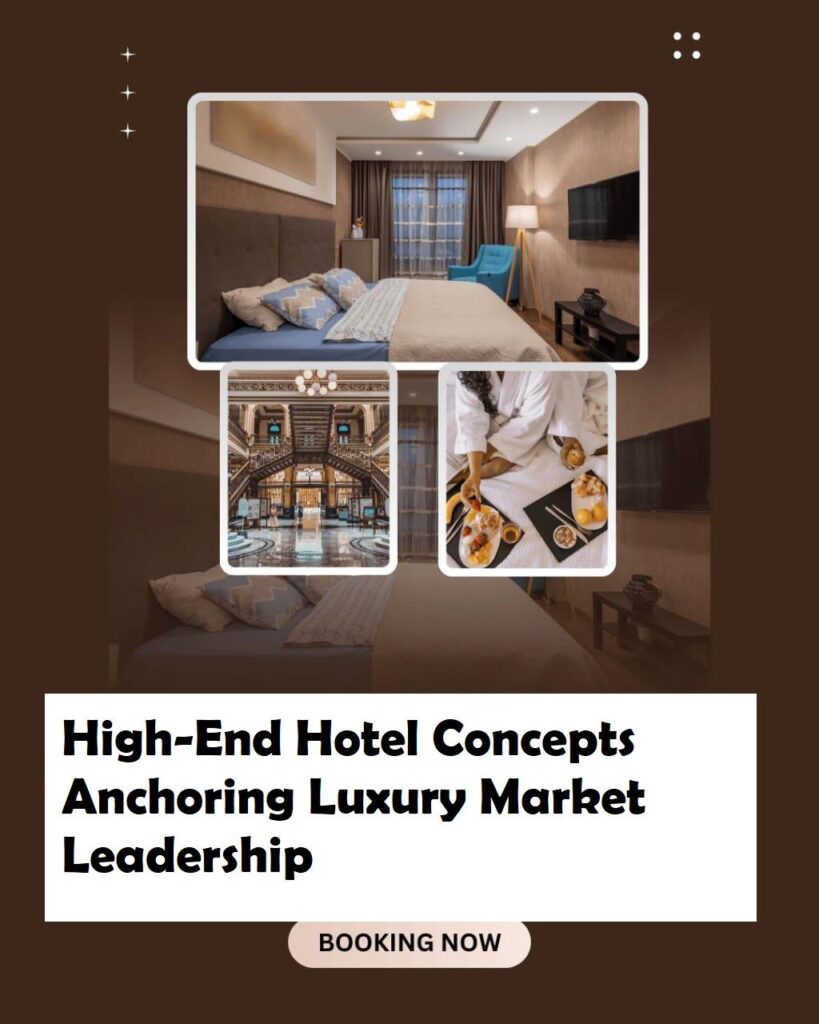
1) The Signature Arrival Ritual
Market-leading hotels treat arrival as a crafted performance—quiet, efficient, and emotionally memorable. Instead of a crowded front desk, guests are guided into a calm, curated space: a private salon with soft lighting, a seasonal scent story, and a welcome beverage designed as a local “taste introduction.” Check-in becomes invisible, handled by a host who already knows preferences—pillow firmness, preferred room temperature, and the pacing of service. The result is immediate trust. Guests feel recognized rather than processed, and that feeling sets a high-value tone that influences everything else: dining, upgrades, extended stays, and return bookings.
2) The Private Residence Suite Portfolio
True luxury leadership is often measured by how well a hotel protects solitude. The residence-style suite concept answers that demand with layouts that mimic private homes—separate living rooms, concealed staff corridors, discreet pantry kitchens, and terraces designed for staying in without feeling confined. The best versions include “suite ecosystems”: dedicated butler support, in-suite dining that feels like restaurant service, and on-call wardrobe steaming, tailoring, and beauty support. These suites aren’t simply larger rooms; they are confidence statements. Guests who travel with family, security needs, or high-profile routines gain a sanctuary where privacy feels natural, not forced.
3) The Culinary Capital Exchange
In luxury markets, food is not an amenity—it’s a competitive advantage. The Culinary Capital Exchange concept positions the hotel as a dining hub where local artisans and global chefs rotate through curated residencies. Guests might experience a chef’s counter paired with rare regional ingredients, a wine program built around limited allocations, or a “market-to-table” journey guided by the hotel’s culinary team. What makes this concept powerful is its rhythm: seasonal menus, limited-seat events, and story-driven tastings that reward curiosity. It turns the hotel into a cultural gateway, making the stay feel like access to something happening now—and nowhere else.
4) The Wellness Observatory
Luxury travelers increasingly seek restoration with the same seriousness they give to business and investment decisions. The Wellness Observatory concept elevates wellness into a comprehensive, personalized system: sleep programming, movement coaching, recovery therapies, and nutrition design that feels tailored rather than trendy. Think sunrise breathwork on a rooftop terrace, hydrotherapy that flows like a ritual, and quiet spaces engineered for nervous-system calm—acoustics, lighting, scent, and materials chosen for impact. Rather than promising transformation through hype, the hotel offers measurable comfort: deeper sleep, lower stress, and a renewed sense of clarity that guests feel on day one.
5) The Art-and-Architecture Narrative
A hotel becomes a leader when it’s instantly recognizable—when its identity is so strong that guests remember it like a landmark. The Art-and-Architecture Narrative concept achieves this by designing a cohesive visual story: locally sourced materials, curated art collections, and spatial design that guides guests through moments of discovery. Corridors feel like galleries, suites carry subtle regional references, and public areas are staged for quiet grandeur rather than noise. The goal isn’t decoration—it’s meaning. Guests feel they’re inhabiting a place with perspective and taste, a destination that validates their standards and strengthens the hotel’s position as a premium authority.
Q&A: More Luxury Hotels to Consider
Q: What hotels feel like “private clubs,” even for first-time guests?
A: Look at properties known for discreet service and high-touch hosting, such as Aman resorts, Rosewood hotels in major gateways, or The Peninsula collection—brands that prioritize calm and consistency.
Q: Which hotels are best for culinary-driven luxury trips?
A: Consider Four Seasons George V Paris for iconic dining, Rosewood Hong Kong for high-end culinary variety, or destination resorts where chef residencies and tasting programs define the itinerary.
Q: Where should wellness-focused travelers start?
A: Choose hotels with comprehensive wellness ecosystems—integrated spa, movement, sleep, and nutrition. Many top alpine retreats, coastal sanctuaries, and Aman-style properties excel here.
Q: What stays offer strong design and cultural identity?
A: For art-forward luxury, explore design-led hotels in Tokyo, Milan, Paris, or New York, plus heritage properties that blend architecture, craftsmanship, and curated local storytelling.
Conclusion
“High-End Hotel Concepts Anchoring Luxury Market Leadership” isn’t just a promise—it’s a standard built through deliberate experiences. From a signature arrival ritual that instantly reassures, to residence-style suites that protect privacy, to culinary and wellness programs designed like premium destinations, these concepts transform a stay into a statement. The most exclusive reward is not simply five-star comfort, but the feeling of belonging to a rarified world where taste is consistent, service is intuitive, and every detail reinforces leadership. In that space, luxury becomes more than indulgence—it becomes identity.