In an age where travel often mirrors the pace and pressure of daily life, truly exceptional destinations are those that offer not just physical comfort, but a sense of mental spaciousness. These are places where time feels elastic, where silence carries intention, and where design gently encourages clarity rather than stimulation. Destinations designed to feel mentally spacious prioritize openness—of thought, of movement, and of emotion—creating environments that allow guests to breathe deeply and reset without effort. Rather than overwhelming the senses, they offer balance, restraint, and thoughtful simplicity that restores focus and calm.
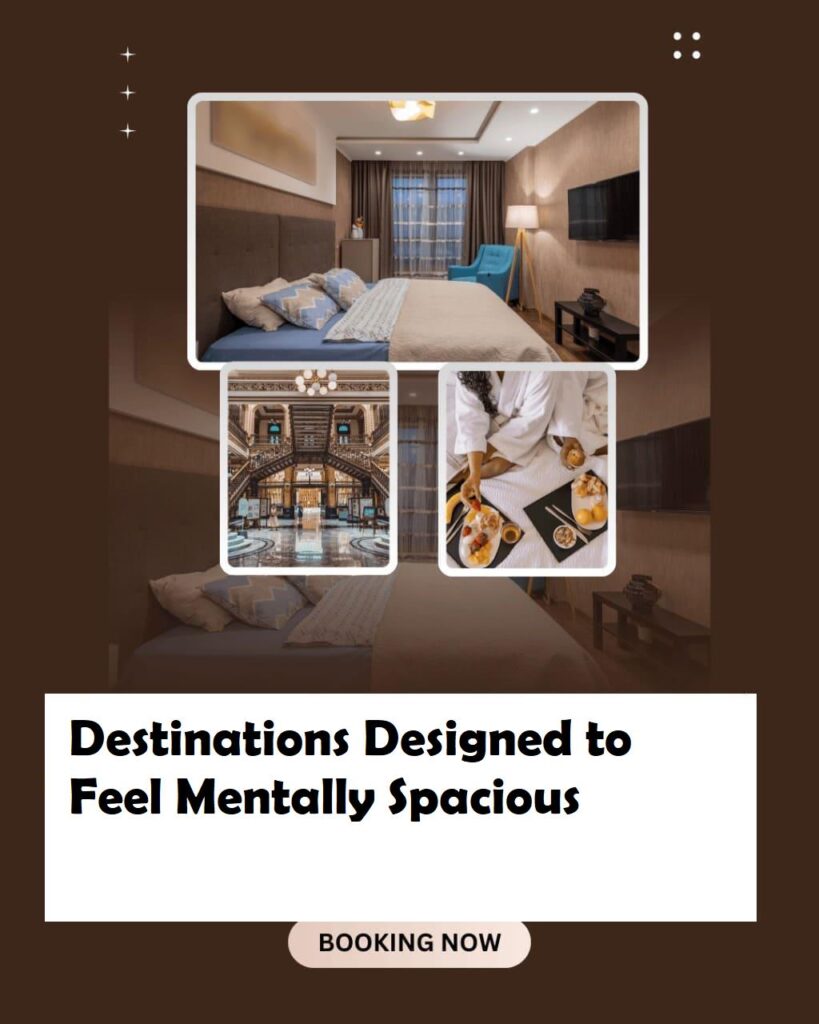
Architecture That Allows the Mind to Wander
Mentally spacious destinations often begin with architecture that values proportion over excess. Wide corridors, high ceilings, and unobstructed sightlines create a subtle sense of freedom from the moment guests arrive. Natural light plays a central role, flowing through open layouts and softly diffused windows that shift with the time of day. These spaces do not demand attention; instead, they invite contemplation. The absence of visual clutter allows the mind to wander naturally, encouraging moments of introspection that feel unforced and deeply personal.
Interiors Defined by Restraint and Rhythm
Inside, the design language remains intentionally restrained. Neutral palettes, tactile materials, and carefully spaced furnishings establish a rhythm that feels both grounding and expansive. Each object has purpose, and every detail feels considered rather than decorative. Seating areas are arranged to provide privacy without isolation, enabling guests to occupy space comfortably without feeling confined. The result is an interior experience that feels calm yet generous—an environment that supports stillness while remaining quietly luxurious.
Landscapes That Create Emotional Distance from Noise
Beyond the walls, the surrounding landscape becomes an extension of mental spaciousness. Whether set against water, forest, desert, or open sky, these destinations emphasize views that stretch outward, offering visual relief from density and distraction. Gardens are designed as places of pause rather than spectacle, with winding paths and shaded corners that invite slow movement. Outdoor spaces are not crowded with activities but curated to allow guests to choose solitude or gentle engagement on their own terms.
Hospitality That Respects Personal Tempo
Service in mentally spacious destinations is defined by intuition rather than intrusion. Staff interactions are warm, observant, and precisely timed, allowing guests to maintain their own rhythm throughout the stay. Check-ins feel unhurried, daily routines remain flexible, and experiences are offered without pressure. This approach fosters a sense of autonomy that enhances relaxation—guests feel supported without being managed, and free without feeling neglected.
Wellness Experiences That Emphasize Simplicity
Wellness offerings in these destinations avoid complexity in favor of clarity. Treatments focus on restoration rather than transformation, using calm environments and minimal sensory input to deepen their effect. Spaces for meditation, movement, or quiet reflection are intentionally understated, allowing the practice itself to take center stage. Even dining follows this philosophy, with menus that highlight balance, seasonality, and thoughtful pacing—meals that nourish without overwhelming.
Q&A: Exploring Other Mentally Spacious Hotel Experiences
Q: Are there hotels that combine urban settings with a sense of mental spaciousness?
A: Yes. Certain city-based retreats achieve this through sound-insulated interiors, elevated viewpoints, and interior courtyards that create a sense of separation from urban intensity.
Q: Which destinations are best for travelers seeking long, uninterrupted stays?
A: Properties designed around extended-stay living often emphasize private terraces, flexible schedules, and residential-style layouts that support longer periods of mental ease.
Q: Can family-friendly resorts still feel mentally spacious?
A: Absolutely. Some destinations skillfully separate communal family areas from quiet adult spaces, ensuring that every guest can find their own version of calm.
Q: Are there coastal retreats that focus more on mental clarity than activity?
A: Many coastal properties prioritize expansive sea views, gentle soundscapes, and slow daily rhythms over high-energy programming, creating ideal conditions for reflection.
Conclusion: Where Space Becomes an Experience
Destinations designed to feel mentally spacious redefine luxury as the freedom to think clearly, move slowly, and exist without urgency. They offer more than beautiful surroundings—they provide an emotional and cognitive reset that lingers long after departure. By combining intentional design, respectful hospitality, and environments that value openness over excess, these destinations deliver an exclusive experience rooted in calm, clarity, and quiet confidence. For travelers seeking not escape but expansion, these spaces offer a rare and deeply rewarding form of luxury.