In an era defined by visibility, metrics, and constant self-presentation, true luxury is increasingly found in experiences that invite us to simply be. Experiences That Encourage Presence Over Performance speaks to a quieter, more intentional form of travel—one that removes the pressure to perform, impress, or document every moment. These experiences are designed to slow the internal pace, allowing guests to reconnect with themselves, their surroundings, and the simple pleasure of awareness. Rather than staging moments for admiration, they cultivate environments where presence feels natural and deeply restorative.
Places Where Time Is Not Measured
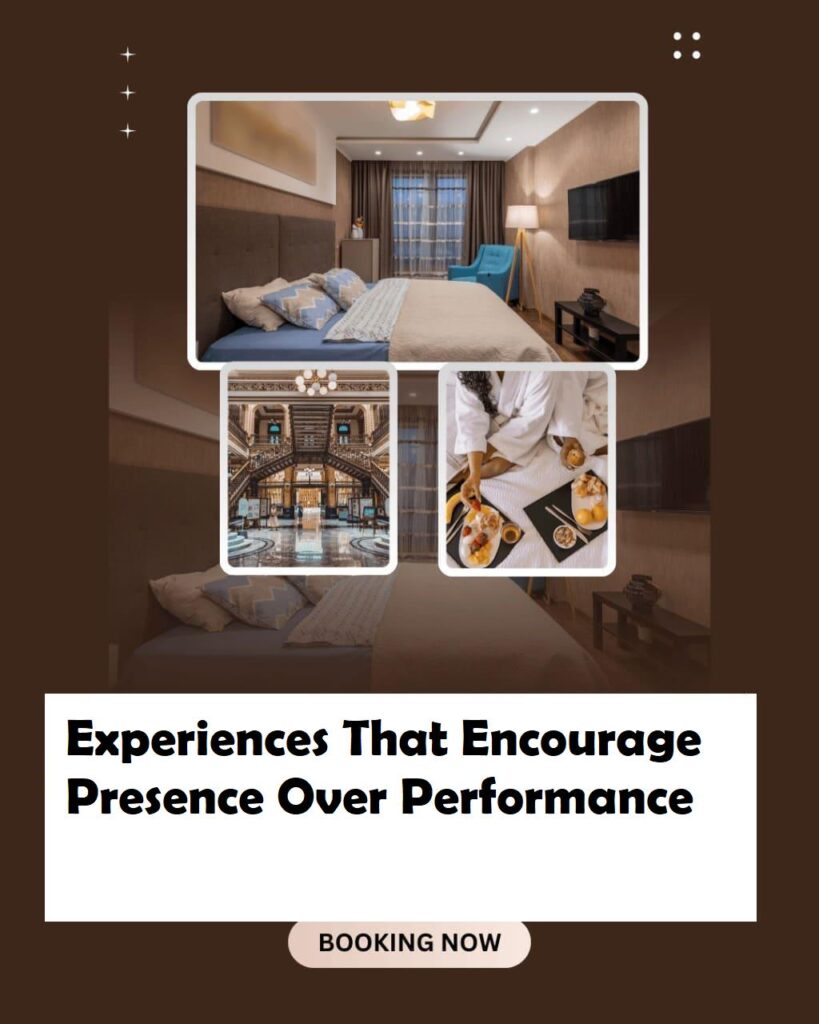
The first category of experiences focuses on destinations where time feels deliberately unstructured. In these places, schedules are softened and routines are optional. Mornings unfold without alarms, afternoons drift without agendas, and evenings arrive without expectation. Architecture supports this rhythm through open layouts, natural light, and spaces that encourage wandering rather than directing movement. Guests often describe these stays as liberating, not because they offer more activities, but because they remove the obligation to optimize every hour.
Retreats That Value Internal Stillness
Some experiences prioritize inner awareness over external stimulation. These retreats are often designed around silence, gentle rituals, and sensory simplicity. Materials are natural, colors subdued, and sound carefully considered. The absence of constant noise and distraction allows guests to notice subtle details: the texture of stone under bare feet, the change in light throughout the day, the cadence of breath. Here, presence becomes an effortless state rather than a practiced discipline.
Environments Designed for Effortless Being
Another expression of presence-focused hospitality appears in environments that require nothing from the guest. There is no expectation to dress a certain way, engage socially, or participate in curated programming. Service is intuitive and discreet, anticipating needs without drawing attention to itself. Guests are free to observe, reflect, or simply rest without explanation. These environments are particularly appealing to travelers who seek refuge from performative lifestyles and high-visibility roles.
Experiences Rooted in Sensory Awareness
Some destinations encourage presence by heightening sensory connection. Thoughtful use of scent, texture, sound, and taste draws attention to the present moment. Meals are unhurried, often highlighting seasonal ingredients and simple preparations. Spaces invite touch—linen curtains, warm wood, cool stone—reminding guests of their physical connection to place. Rather than overwhelming the senses, these experiences refine them, creating clarity instead of stimulation.
Stays That Remove the Need for Validation
In contrast to highly social or status-oriented settings, these experiences offer privacy without isolation. Guests are not asked to participate, share, or prove engagement. There is no implicit audience. This absence of validation allows travelers to experience moments fully, without translating them into narratives for others. Presence becomes personal, internal, and quietly meaningful.
Q&A: Additional Hotels That Embrace Presence-First Experiences
Q: Are there hotels that encourage slowing down without formal wellness programs?
Yes. Many understated luxury hotels focus on atmosphere rather than instruction. They design spaces that naturally invite calm—through light, proportion, and privacy—without structured activities.
Q: What types of destinations are best for presence-oriented travel?
Remote coastal areas, countryside retreats, and nature-integrated properties often support presence by reducing external noise and visual clutter, allowing the environment to guide the experience.
Q: Can urban hotels also encourage presence over performance?
Absolutely. Some city hotels achieve this through soundproofed interiors, minimalist design, and personalized service that creates a sense of retreat within an active environment.
Q: Are these experiences suitable for solo travelers?
Very much so. Solo travelers often find presence-focused stays especially rewarding, as they remove social expectations and allow time for reflection without judgment.
Q: Do these hotels still offer luxury amenities?
Yes, but luxury is expressed through quality, space, and restraint rather than excess. Amenities are purposeful, refined, and designed to support comfort without distraction.
Conclusion: The Quiet Power of Presence
Experiences That Encourage Presence Over Performance redefine luxury as freedom from expectation. They offer travelers the rare opportunity to exist without observation, to rest without justification, and to experience moments without translating them into achievements. In these environments, presence is not something to practice or perfect—it arises naturally through thoughtful design, intuitive service, and respect for the guest’s inner rhythm. For those seeking a deeper, more personal form of travel, these experiences offer an exclusive and profoundly meaningful kind of luxury.