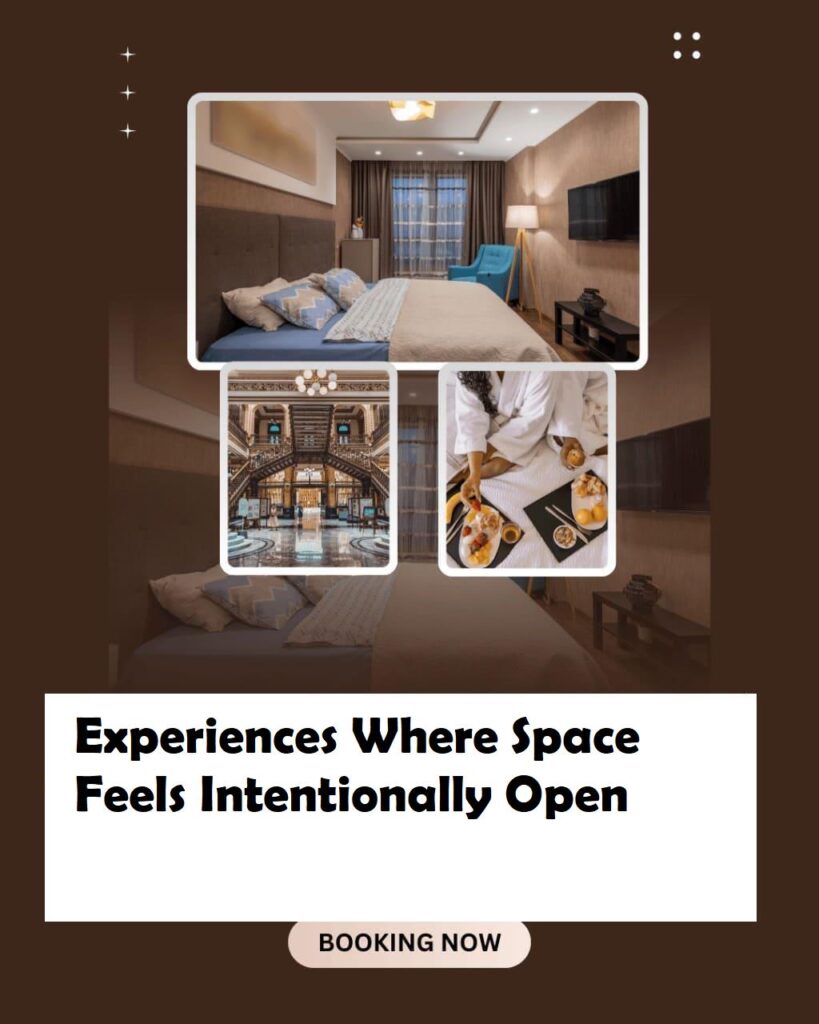
There is a particular kind of luxury that reveals itself not through ornament or excess, but through space itself. Experiences where space feels intentionally open invite guests to breathe differently, to move more slowly, and to reconnect with a sense of balance that modern life often compresses. In these environments, openness is not accidental—it is carefully designed. Every corridor, terrace, and interior volume is shaped to create calm, clarity, and an emotional sense of freedom. These destinations appeal to travelers who value room to think, room to feel, and room to simply exist without pressure.
Architecture That Respects Distance
At places like Aman Tokyo, openness begins the moment guests arrive. Vast atriums, high ceilings, and expansive sightlines replace the usual density of urban hotels. The space is not empty; it is intentional. Natural materials, subtle lighting, and restrained design allow the architecture to step back, giving guests psychological distance from the city below. Here, openness becomes a form of quiet luxury—one that communicates confidence and restraint rather than spectacle.
Landscapes That Breathe With the Guest
In destinations such as Amangiri, open space is inseparable from the surrounding landscape. The resort’s design mirrors the vast desert plains and dramatic rock formations, blurring the line between interior and exterior. Rooms open toward endless horizons, and communal spaces feel more like viewing platforms than enclosed lounges. Guests experience openness as a dialogue with nature—one that encourages contemplation, stillness, and a heightened awareness of place.
Interiors Designed for Mental Clarity
Some hotels express openness through interior flow rather than scale alone. The Chedi Andermatt demonstrates how generous spacing, minimal partitions, and thoughtful lighting can create emotional calm even in alpine environments. Long sightlines across lounges and dining areas allow the eye to rest. Furniture placement respects personal space, ensuring privacy without isolation. The result is an atmosphere where openness feels protective rather than exposed.
Privacy Through Spaciousness
True openness does not mean a lack of privacy. At Six Senses Zil Pasyon, villas are positioned far apart, surrounded by vegetation and ocean views. The sense of openness comes from the absence of intrusion—no visual clutter, no overlapping noise, no sense of being observed. Guests enjoy expansive terraces, private pools, and uninterrupted views, reinforcing the idea that space itself is a form of personalized service.
Cultural Openness and Spatial Balance
In culturally rich settings, openness can also express respect for tradition. Aman Kyoto integrates open courtyards, garden paths, and transitional spaces inspired by classical Japanese design. Movement between spaces becomes ceremonial and unhurried. The openness here is subtle and deeply intentional, guiding guests into a slower rhythm that aligns with seasonal changes and natural light.
Q&A: Exploring More Open-Concept Luxury Stays
Q: Which hotels are ideal for travelers who value architectural openness?
A: Properties like Aman Tokyo and The Chedi Andermatt are excellent choices, as they prioritize scale, flow, and visual breathing room.
Q: Are there open-space hotels suited for nature-focused retreats?
A: Yes. Amangiri and Six Senses Zil Pasyon offer expansive natural settings where space feels limitless and deeply restorative.
Q: Can open design still feel intimate and personal?
A: Absolutely. Open design works best when paired with thoughtful zoning and privacy. Hotels like Aman Kyoto demonstrate how openness and intimacy can coexist harmoniously.
Conclusion: The Luxury of Intentional Openness
Experiences where space feels intentionally open redefine what it means to travel well. These destinations prove that luxury is not always about addition, but often about subtraction—removing excess to reveal calm, clarity, and emotional ease. Through expansive architecture, thoughtful layouts, and respectful integration with nature, these hotels create environments where guests feel unhurried and unconfined. For travelers seeking refined comfort, mental spaciousness, and a deeper connection to their surroundings, these open, intentional spaces offer an exclusive and deeply rewarding way to experience hospitality.