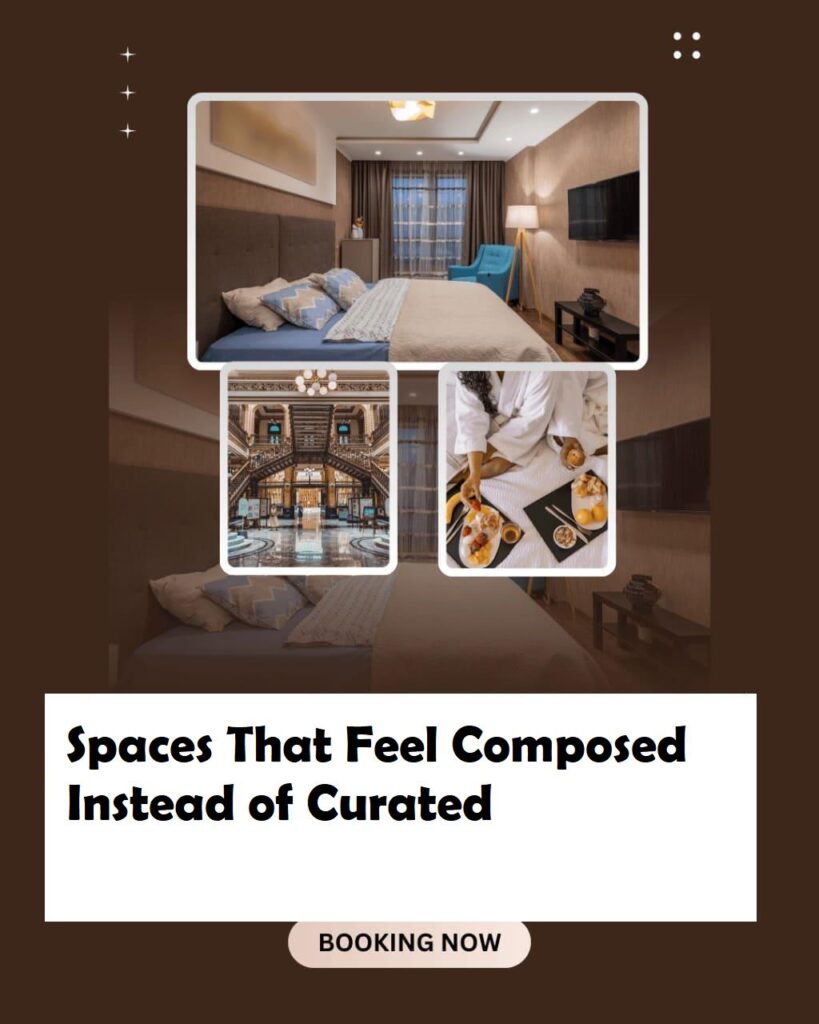
In an era where many luxury spaces compete for attention through visual statements, a quieter philosophy has begun to define the most memorable hotel experiences. Spaces That Feel Composed Instead of Curated speaks to destinations where design is not assembled for admiration, but composed for living. These environments feel resolved rather than arranged, guided by proportion, light, material, and restraint. Instead of asking guests to notice design, they allow guests to settle into it, creating a sense of ease that unfolds gradually and lingers long after departure.
Architecture That Resolves, Not Impresses
The first hallmark of composed spaces lies in architecture that feels inevitable. Lines are calm, transitions are fluid, and nothing appears added for effect. Buildings seem to rise naturally from their surroundings, shaped by climate, topography, and human scale. Here, arrival is not a moment of spectacle but of alignment—where the exterior quietly prepares the mind for the interior experience. Guests sense balance immediately, even if they cannot explain why.
Interiors Guided by Rhythm and Restraint
Inside, composed hotels rely on rhythm rather than decoration. Materials repeat gently—stone echoing stone, wood responding to light—creating continuity instead of contrast. Furniture is chosen for proportion and comfort, not statement value. Colors are softened, textures are tactile, and spaces breathe. The result is an atmosphere where nothing feels temporary or trend-driven, allowing guests to feel grounded rather than stimulated.
Light as a Design Language
In these spaces, light is treated as a primary material. Natural light is shaped, filtered, and respected, defining how rooms change throughout the day. Morning feels expansive, afternoons become contemplative, and evenings settle into warmth. Artificial lighting follows the same philosophy—low, indirect, and deliberate. This sensitivity to light reinforces a sense of time slowing, encouraging guests to move intuitively rather than according to schedule.
Landscapes That Complete the Experience
Composed hospitality does not stop at walls. Outdoor spaces are designed as extensions of interior calm, not as separate attractions. Gardens feel restorative rather than ornamental, pathways invite wandering, and views are framed rather than dramatized. Whether overlooking water, forest, or open land, the landscape participates in the composition, offering silence, scale, and emotional relief from overstimulation.
Service That Feels Integrated
The final layer of composition is service. In these destinations, hospitality is present without performance. Staff movements are unintrusive, interactions are warm but unforced, and anticipation replaces interruption. Guests feel understood rather than managed. This seamless service reinforces the sense that everything has its place, contributing to an environment where comfort feels natural rather than engineered.
Q&A: Hotels Known for Composed Design Experiences
Q: Which hotels best embody spaces that feel composed rather than curated?
A: Several destinations around the world exemplify this philosophy. Aman Tokyo offers an interior world defined by scale, silence, and material harmony, where urban energy dissolves into calm. The Brando integrates architecture with nature so seamlessly that luxury feels environmental rather than imposed. Meanwhile, Fogo Island Inn demonstrates how thoughtful composition can feel deeply rooted, authentic, and emotionally resonant.
Q: Are these experiences suitable for travelers seeking privacy and mental clarity?
A: Absolutely. Composed spaces naturally support privacy and introspection. Their layouts discourage noise and visual overload, making them ideal for travelers seeking mental clarity, creative focus, or restorative solitude.
Q: What kind of guest is most drawn to this style of hospitality?
A: These destinations appeal to travelers who value subtlety over spectacle—individuals who appreciate craftsmanship, emotional comfort, and environments that support well-being rather than social display.
Conclusion
Spaces That Feel Composed Instead of Curated represent a refined evolution of luxury hospitality. They prioritize emotional balance over visual impact, coherence over collection, and presence over performance. For guests, the reward is an experience that feels quietly exclusive—one that restores rather than impresses, and resonates not through what is seen, but through how it feels. In these spaces, luxury becomes less about being observed, and more about being at ease.