In an era defined by constant alerts, crowded itineraries, and visual excess, true stillness has become one of the rarest forms of luxury. Travelers today are no longer impressed solely by grandeur or ornamentation; instead, they seek environments that offer relief from noise—both external and internal. Where Stillness Is Treated as a Luxury speaks to destinations that understand silence not as emptiness, but as intention. These are places where calm is curated, space is respected, and every detail is designed to slow the pace of thought and movement.
Rather than overwhelming guests with spectacle, these refined retreats elevate the experience through restraint. Stillness becomes an amenity, thoughtfully protected and seamlessly integrated into architecture, service, and atmosphere. Below are several distinctive themes that define how select hospitality experiences transform quiet into something profoundly valuable.
Architecture That Holds Silence
Some hotels achieve tranquility through form itself. Architecture here is not expressive, but supportive—designed to hold silence rather than compete with it. High ceilings soften sound, natural materials absorb echo, and layouts encourage privacy without isolation. Corridors are wide and gently lit, rooms are positioned to avoid intrusion, and shared spaces feel contemplative rather than social by default.
In these environments, guests sense calm before consciously noticing it. The building seems to breathe slowly, allowing the guest to do the same. Stillness becomes structural, woven into the very bones of the space.
Nature as a Quiet Companion
Another expression of stillness emerges through intentional proximity to nature. Instead of dramatic landscapes meant to impress, these destinations frame nature as a constant, calming presence. Gardens are sparse and balanced, views are unobstructed, and outdoor spaces are designed for pause rather than activity.
Morning light filters gently into rooms, water features create low, rhythmic sound, and open-air paths encourage unhurried movement. Nature is not staged—it is respected. Guests are invited to observe rather than consume, finding mental clarity through subtle, repeated moments of calm.
Service That Knows When to Step Back
True luxury in stillness-oriented hospitality is often revealed in what doesn’t happen. Service is attentive yet invisible, designed to anticipate needs without interruption. Interactions are measured, voices are soft, and timing is impeccable.
Staff members understand that constant check-ins break the spell of calm. Instead, they operate with quiet confidence, offering presence only when invited. This respectful distance allows guests to fully inhabit their own rhythm, free from the pressure of performance or expectation.
Interiors Designed for Mental Rest
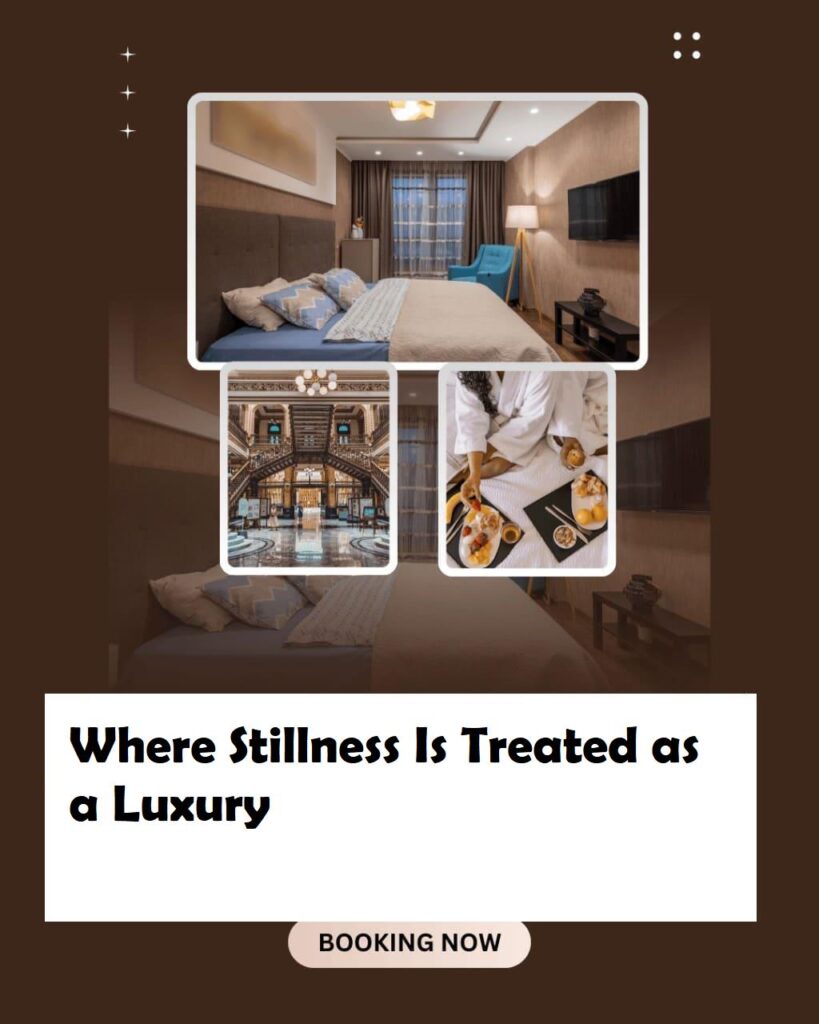
Inside guest rooms and shared spaces, design choices favor mental ease over visual stimulation. Color palettes are muted, textures are natural, and furnishings are selected for comfort rather than statement. Art is minimal and purposeful, lighting is layered and gentle, and technology is discreetly integrated.
These interiors do not demand attention. Instead, they create a sense of psychological safety—spaces where the mind can settle naturally. Guests often describe these rooms as places where time feels suspended, allowing rest to deepen beyond physical comfort.
Rituals of Quiet Living
Stillness-focused hotels often introduce daily rituals that reinforce a slower pace of living. This might include silent breakfast hours, evening light-dimming ceremonies, or wellness practices that emphasize breathing and awareness rather than exertion.
Such rituals gently guide guests toward mindfulness without instruction. There is no pressure to participate, only an invitation to align with an atmosphere that values presence over productivity. Over time, guests find themselves moving more slowly, thinking more clearly, and resting more deeply.
Q&A: Thoughtfully Quiet Hotel Recommendations
Q: Are there luxury hotels known for prioritizing silence and calm?
A: Yes. Properties such as Aman Tokyo, COMO Shambhala Estate, and The Upper House are widely recognized for designing experiences around tranquility, spatial generosity, and emotional ease.
Q: What type of traveler benefits most from these destinations?
A: These environments are ideal for guests seeking mental clarity, creative renewal, or restorative rest. They appeal to travelers who value privacy, subtlety, and emotional balance over social energy and constant stimulation.
Q: Do stillness-focused hotels sacrifice luxury amenities?
A: Not at all. Luxury remains present, but it is expressed through quality, discretion, and thoughtful design rather than abundance. Every element exists for a reason, enhancing comfort without excess.
Conclusion: The Quiet Power of Intentional Calm
Where Stillness Is Treated as a Luxury represents a refined evolution of hospitality—one that recognizes silence as a premium experience rather than an absence. These destinations offer more than beautiful rooms or impeccable service; they provide emotional space in a world that rarely allows it.