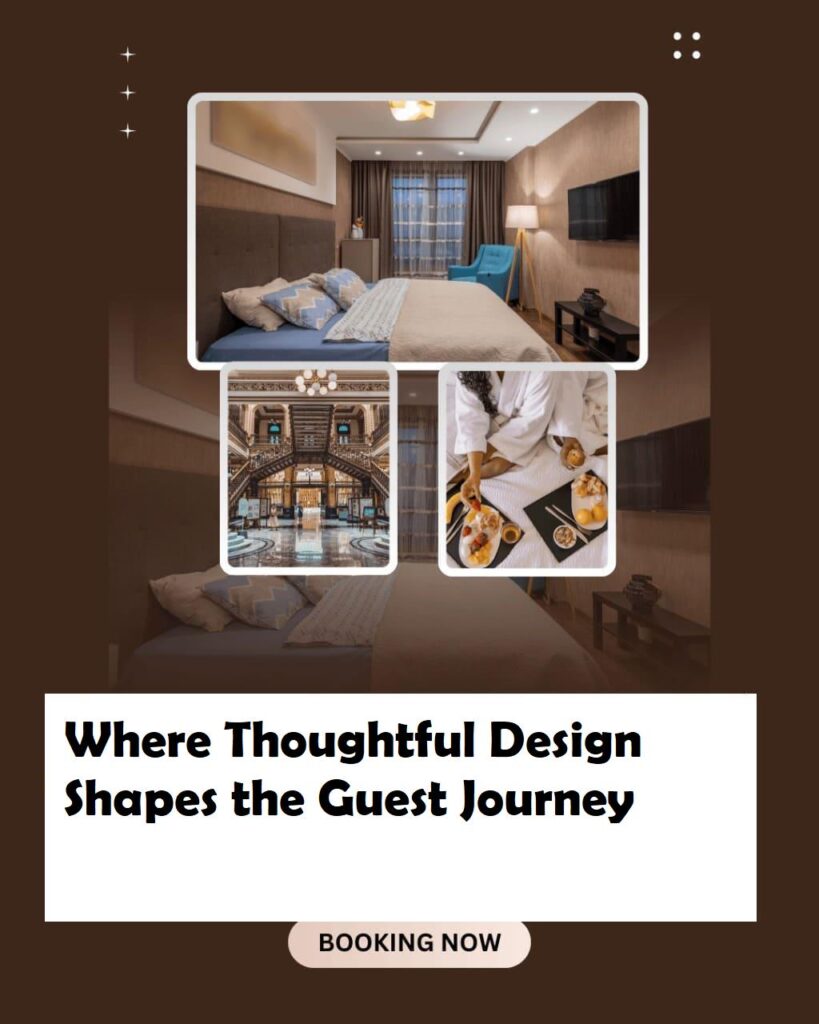
In today’s refined travel landscape, luxury is no longer defined solely by opulence or scale. Instead, it is shaped by intention—by spaces carefully designed to guide guests through moments of calm, discovery, and personal connection. Where Thoughtful Design Shapes the Guest Journey explores how modern hospitality uses design as a quiet narrator, subtly influencing how guests feel, move, and remember their stay. These environments do not overwhelm; they invite. Every detail exists to support a seamless journey where comfort, emotion, and purpose align naturally.
Arrival as a Gentle Transition
The guest experience begins long before reaching the room. Thoughtfully designed hotels treat arrival as a transition from the outside world into a slower, more deliberate rhythm. Architecture often opens gradually, with pathways, courtyards, or layered entrances that allow guests to mentally detach from travel stress. Natural materials, filtered light, and balanced proportions create an immediate sense of grounding. Rather than impressing through scale, these spaces communicate reassurance—signaling that the guest’s time will be respected from the very first step inside.
Spaces That Encourage Intuitive Movement
Exceptional design guides guests without instruction. Hallways flow naturally toward social areas, while private spaces remain subtly protected. The placement of lounges, staircases, and corridors reflects an understanding of human behavior—where people pause, where they gather, and where they seek solitude. Design becomes an invisible companion, making navigation effortless and intuitive. Guests feel comfortable exploring because the environment anticipates their needs without demanding attention.
Rooms Designed for Emotional Comfort
In well-considered hotels, guest rooms are not merely places to sleep but personal sanctuaries shaped by restraint. Layouts prioritize openness and clarity, avoiding unnecessary visual noise. Furniture is positioned to frame views, light sources are layered to suit different moods, and textures are chosen for tactile warmth rather than ornamentation. These rooms respond to the guest’s emotional state, offering calm in the evening and clarity in the morning. The result is a space that feels less like a hotel and more like a thoughtfully curated retreat.
Shared Areas That Balance Privacy and Connection
Thoughtful design also understands the delicate balance between social interaction and personal space. Public areas are arranged to offer choice—inviting conversation without forcing it. Seating is often broken into smaller groupings, allowing guests to feel present without being exposed. Restaurants, libraries, and lounges reflect a rhythm that adapts throughout the day, shifting from energetic mornings to reflective evenings. These spaces support both connection and solitude, empowering guests to shape their own experience.
Wellness Integrated Into Everyday Design
Rather than isolating wellness in dedicated facilities alone, design-led hotels integrate restorative elements throughout the property. Natural light, acoustic balance, greenery, and airflow are considered essential, not optional. Even transitional spaces—corridors, stairwells, and terraces—contribute to a sense of well-being. This holistic approach ensures that relaxation is not scheduled but continuous, woven into every moment of the guest journey.
Q&A: Recommended Hotels Reflecting Thoughtful Design
Q: Which hotels are known for using design to create a seamless guest experience?
A: Several luxury properties excel in this philosophy, focusing on clarity, comfort, and emotional flow rather than excess. These hotels prioritize spatial harmony and guest-centered layouts.
Q: Are boutique hotels better suited for design-led experiences?
A: Boutique hotels often excel due to their smaller scale, allowing for greater attention to detail. However, many large luxury resorts also embrace thoughtful design by zoning spaces carefully and maintaining a human-centered approach.
Q: What should guests look for when choosing a design-focused hotel?
A: Look for descriptions emphasizing atmosphere, flow, and intention rather than just amenities. Reviews that mention calmness, ease, or a sense of belonging often indicate successful design.
Q: Can design truly affect how memorable a stay feels?
A: Absolutely. When guests feel understood by a space—when nothing feels forced or overlooked—the experience becomes deeply memorable, even without overt luxury displays.
Conclusion: Design as the Silent Host
Where Thoughtful Design Shapes the Guest Journey reveals a new definition of luxury—one rooted in awareness, restraint, and emotional intelligence. These hotels succeed not by showcasing design, but by letting it quietly serve the guest. Every transition feels natural, every space purposeful, and every moment intentional. For travelers seeking experiences that feel both personal and effortless, thoughtful design becomes the ultimate host—guiding, supporting, and enhancing the journey without ever demanding attention.