In an era where travel imagery is often dominated by striking visuals and bold architectural statements, a quieter movement has emerged—one that values atmosphere over spectacle. These experiences are not designed to impress at first glance but to reveal themselves gradually through tone, rhythm, and emotional comfort. Rather than relying on dramatic design elements, they cultivate a sense of calm, intimacy, and presence. Guests are drawn not by what demands attention, but by what gently holds it. This approach to hospitality prioritizes feeling over display, inviting travelers to slow down and engage with their surroundings in a more meaningful way.
The Comfort of Subtle Presence
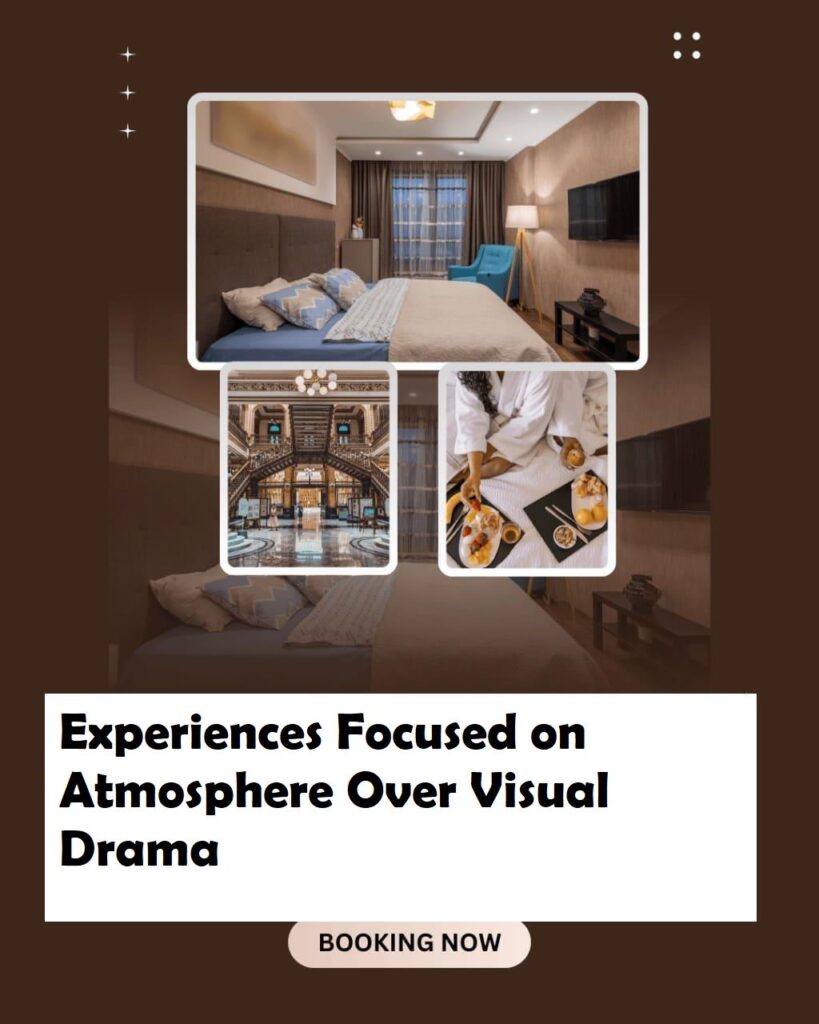
The most memorable stays often begin with a sense of ease rather than excitement. Spaces designed with atmospheric intent focus on how a room feels when occupied—how light settles in the late afternoon, how sound is softened, how materials absorb rather than reflect attention. These environments avoid overstimulation. Instead of bold contrasts or theatrical layouts, they rely on balanced proportions, warm textures, and intentional restraint. The result is a setting that feels immediately inhabitable, allowing guests to settle into their own pace without adjustment.
Interiors That Support Emotional Quiet
Atmosphere-driven hospitality understands that emotional comfort is built through continuity. Interiors flow without abrupt transitions, encouraging movement that feels natural rather than guided. Color palettes are subdued, often inspired by local landscapes, and furnishings are selected for their tactile quality rather than visual impact. Lighting plays a crucial role—never harsh, always layered—creating moments of softness that evolve throughout the day. These spaces do not seek to impress visitors; they aim to support them.
Sound, Scent, and Spatial Balance
Beyond what is seen, these experiences are carefully composed through elements often overlooked. Soundscapes are intentionally minimal, allowing natural silence or distant ambient tones to define the environment. Scent is subtle and consistent, reinforcing memory without overwhelming the senses. Spatial balance ensures that no area feels crowded or empty, maintaining a steady sense of equilibrium. Together, these details create an atmosphere that feels cohesive and deeply considered, encouraging guests to remain present rather than distracted.
Hospitality That Feels Unforced
Service in atmosphere-focused environments mirrors the design philosophy. Interactions are thoughtful but unobtrusive, responsive without being performative. Guests are given space to exist without constant engagement, fostering a sense of autonomy and respect. This approach builds trust, allowing travelers to feel genuinely welcomed rather than managed. Over time, this quiet confidence becomes the defining feature of the stay.
A Different Kind of Luxury
Luxury, in this context, is not measured by scale or extravagance but by emotional clarity. It is found in moments of uninterrupted stillness, in the ease of moving through a space that anticipates needs without announcing them. These experiences appeal to travelers who value depth over display—those who seek environments that support reflection, rest, and understated pleasure.
Q&A: Hotels Known for Atmosphere-Driven Experiences
Q: Which hotels are recognized for prioritizing atmosphere over visual drama?
A: Several properties are renowned for their understated approach, including Aman Tokyo, where calm spatial design and natural materials create a serene urban retreat. The Lombok Lodge offers quiet refinement through intimate scale and thoughtful service, while Fogo Island Inn balances dramatic landscapes with interiors designed for introspection rather than spectacle.
Q: Are these experiences suitable for first-time luxury travelers?
A: Absolutely. Atmosphere-focused hotels often feel more approachable because they remove the pressure to perform or conform. Their environments encourage comfort and authenticity, making them ideal for guests seeking meaningful relaxation rather than visual excess.
Q: What type of traveler benefits most from this style of hospitality?
A: Travelers who value emotional well-being, privacy, and a sense of continuity often gravitate toward these experiences. They are especially appealing to those who travel frequently and appreciate spaces that restore rather than stimulate.
Conclusion: The Power of Quiet Design
Experiences focused on atmosphere over visual drama redefine what it means to travel well. By emphasizing emotional resonance, sensory balance, and thoughtful restraint, they create environments that feel deeply personal and enduring. These are places where luxury is not announced but felt—where guests leave not with images, but with a lasting sense of calm and connection. For those seeking exclusivity through subtlety, this approach offers a profoundly rewarding way to experience the world.