In a world where travel itineraries are often dictated by check-in times, dining schedules, and curated activities, a new kind of luxury has quietly emerged. Spaces Where Guests Control Their Own Rhythm speaks to destinations designed around personal pace rather than programmed experiences. These are places where mornings unfold without alarms, where afternoons stretch or shorten according to mood, and where evenings arrive gently—never announced, never rushed. The appeal lies not in abundance, but in autonomy: the rare privilege of shaping time itself while surrounded by thoughtful comfort and calm design.
Unstructured Mornings as a Luxury Choice
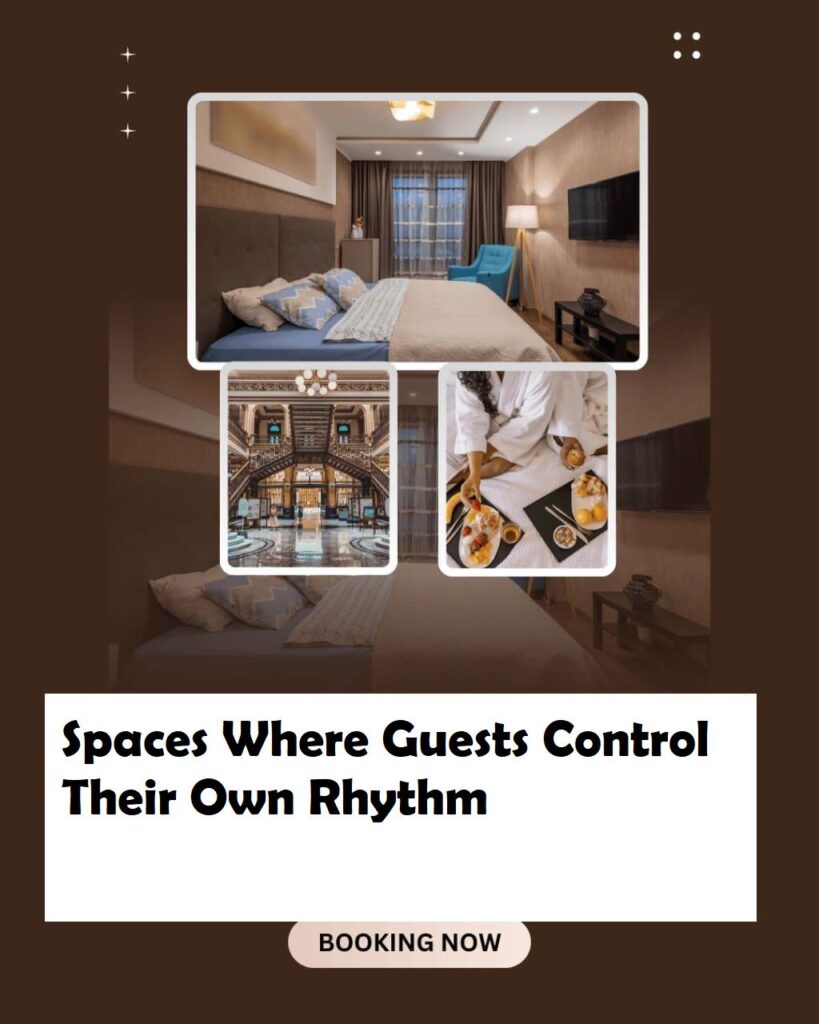
The first expression of guest-controlled rhythm appears at the very start of the day. These hotels eliminate the pressure of fixed breakfast hours or early housekeeping routines. Instead, guests wake when their bodies decide, greeted by natural light, quiet surroundings, and subtle service that adapts rather than interrupts. Whether breakfast arrives slowly on a private terrace or is enjoyed hours later in a sunlit lounge, the morning becomes personal territory—unclaimed by schedules and expectations.
Architecture That Encourages Personal Flow
Design plays a central role in supporting this freedom. Circulation within the property is intuitive, never forcing guests along predetermined paths. Lounges, gardens, and wellness spaces are positioned to be discovered organically rather than announced. Guests drift from one space to another, guided by curiosity rather than signage. The architecture itself respects individual tempo, offering both openness for exploration and secluded corners for stillness, allowing each visitor to move through the day in their own rhythm.
Dining Without Timetables
In these spaces, dining is detached from the rigidity of reservations and time slots. Restaurants and in-room dining services operate with flexibility, accommodating spontaneous hunger rather than scheduled meals. Menus emphasize balance and simplicity, supporting light grazing or long, unhurried dinners. Guests are free to eat early, late, or somewhere in between—reinforcing the idea that nourishment should follow instinct, not a clock.
Wellness on Personal Terms
Unlike traditional wellness retreats with strict class schedules and structured programs, these hotels present wellness as an open invitation. Spa facilities remain accessible throughout the day, meditation rooms are always available, and movement spaces encourage self-guided use. Guests may choose a full day of rest or a brief moment of restoration between activities. Wellness becomes an option, not an obligation—enhancing the sense of personal control.
Evenings Defined by Mood, Not Momentum
As daylight fades, the rhythm remains guest-led. Evenings might unfold in complete silence, accompanied only by soft lighting and a book, or evolve into intimate conversations in understated social spaces. There is no pressure to participate, no expectation of entertainment. Music, when present, exists as a background element—never commanding attention. The atmosphere adapts to guests, allowing nights to feel expansive or intimate depending on individual desire.
Q&A: Additional Hotels That Embrace Guest-Controlled Rhythm
Q: Are there hotels that remove traditional check-in and check-out pressures?
Yes. Several high-end properties now offer flexible arrival and departure windows, recognizing that travel fatigue and personal schedules vary. This approach reinforces a sense of ownership over time from the very first moment.
Q: Which destinations best support this slow, self-paced experience?
Secluded coastal retreats, countryside lodges, and low-density island resorts are particularly suited to this philosophy. Their natural environments already encourage a slower tempo, which these hotels enhance through thoughtful service design.
Q: Can urban hotels also support guest-controlled rhythm?
Absolutely. Some city hotels achieve this by creating quiet internal sanctuaries—sound-insulated rooms, private lounges, and discreet service flows—allowing guests to retreat from urban intensity while remaining centrally located.
Q: Are these experiences suitable for longer stays?
They are ideal for extended visits. The absence of rigid structure allows guests to settle into a natural routine, making longer stays feel restorative rather than repetitive.
Conclusion: Luxury Measured in Personal Time
Spaces Where Guests Control Their Own Rhythm represent a refined evolution of luxury hospitality—one that prioritizes autonomy over abundance and presence over performance. These destinations succeed not by offering more, but by allowing guests to decide when, how, and even if they engage. The result is an experience that feels deeply personal, quietly exclusive, and genuinely restorative. In controlling their own rhythm, guests rediscover a sense of balance that extends far beyond their stay—making these spaces not just places to visit, but environments that linger long after departure.