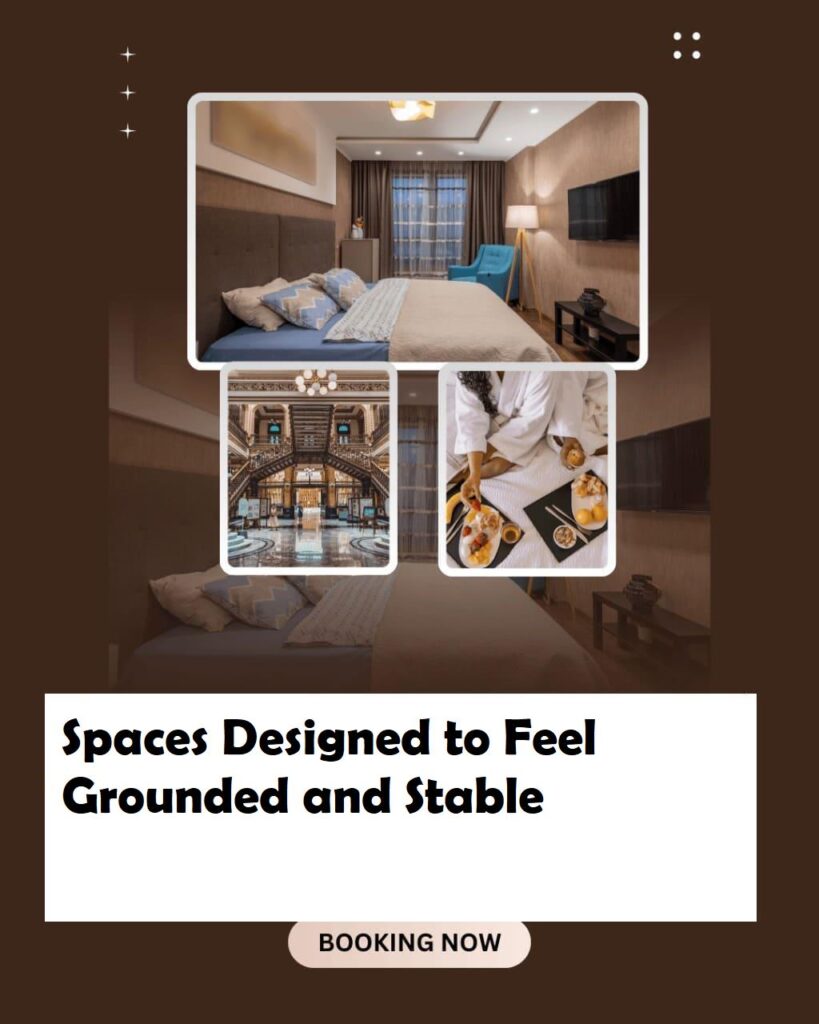
In an age where travel often mirrors the pace and pressure of daily life, a growing number of destinations are redefining luxury through stability rather than spectacle. Spaces Designed to Feel Grounded and Stable speaks to a new hospitality philosophy—one that values emotional balance, physical calm, and an enduring sense of place. These environments are not built to impress in a single glance, but to quietly support guests through thoughtful design, measured service, and a deep connection to their surroundings. Here, luxury is not loud. It is steady, reassuring, and deeply restorative.
Architecture That Anchors the Experience
Grounded spaces begin with architecture that feels intentional and secure. Thick walls, natural stone, warm woods, and low-profile structures create a physical sense of protection and permanence. These buildings seem to belong to the land rather than dominate it. Entryways are unhurried, corridors are softly lit, and communal areas feel expansive without being overwhelming. The result is an environment where guests instinctively slow their pace, feeling held rather than hurried by the space around them.
Interiors Built on Balance and Restraint
Inside, stability is expressed through restraint. Neutral palettes, tactile materials, and uncluttered layouts allow the mind to rest. Furniture is chosen for comfort and longevity rather than trend, encouraging guests to settle in rather than move on quickly. Lighting is layered and indirect, avoiding harsh contrasts. Even decorative elements serve a calming purpose—ceramics, textiles, and art pieces that evoke continuity rather than distraction. These interiors do not demand attention; they offer quiet companionship.
Landscapes That Reinforce Calm
The outdoor environment plays a crucial role in reinforcing groundedness. Gardens are designed with symmetry and flow, often using native plants that reflect the local ecosystem. Water features move gently, pathways curve naturally, and seating areas invite stillness rather than activity. Whether overlooking mountains, forests, or open plains, these landscapes create visual stability—unchanging views that remind guests of rhythm, season, and time moving at its own pace.
Hospitality That Feels Reliable and Unforced
Service in grounded spaces is marked by consistency rather than excess. Staff interactions are calm, confident, and unobtrusive. Guests feel supported without feeling managed. Requests are handled smoothly, routines are predictable, and privacy is respected. This reliability builds trust, allowing visitors to fully relax. Knowing that everything functions quietly in the background is, in itself, a luxury—one that allows guests to focus inward rather than remain alert.
Rooms Designed for Deep Rest
Guest rooms continue the theme of stability through thoughtful spatial planning. Beds are positioned to feel protected, seating areas are clearly defined, and storage is discreet. Sound insulation and climate control are carefully calibrated, ensuring uninterrupted rest. Natural materials dominate—linen, wood, stone—creating sensory continuity. These rooms are not showcases; they are sanctuaries designed for long, restorative stays rather than fleeting visits.
Q&A: Hotels That Embody Grounded Luxury
Q: Which hotels best represent spaces designed to feel grounded and stable?
A: Properties such as Aman Kyoto, The Lodge at Blue Sky, and Borgo Santo Pietro exemplify this philosophy. Each uses architecture, landscape, and service to create a sense of permanence and calm.
Q: Are these hotels suitable for longer stays?
A: Yes. Their stable environments and predictable rhythms make them ideal for extended stays, creative retreats, or travelers seeking genuine restoration rather than constant stimulation.
Q: Who benefits most from this type of hospitality?
A: Guests who value emotional ease, mental clarity, and subtle luxury—often seasoned travelers, creatives, and those seeking meaningful rest—find these spaces particularly rewarding.
Conclusion: Stability as the New Signature of Luxury
Spaces Designed to Feel Grounded and Stable represent a refined evolution of luxury hospitality. By prioritizing balance, reliability, and a deep sense of place, these environments offer more than comfort—they provide emotional grounding. Guests leave not just rested, but re-centered, carrying with them a quiet confidence shaped by thoughtful design and understated care. In a world that rarely slows down, these spaces offer something truly exclusive: the assurance of calm that endures long after the journey ends.