In a world engineered for constant stimulation—screens, notifications, curated excitement—true luxury is increasingly defined by its opposite. Experiences That Replace Stimulation with Restoration speak to a new class of travel, one that values recovery over reaction, presence over performance. These experiences are not designed to impress at first glance, but to gently recalibrate the nervous system over time. They invite guests into environments where silence is intentional, pacing is humane, and every detail serves the body’s need to reset rather than be entertained.
Below are several experiential themes that embody this philosophy, each offering a distinct pathway from overload to renewal.
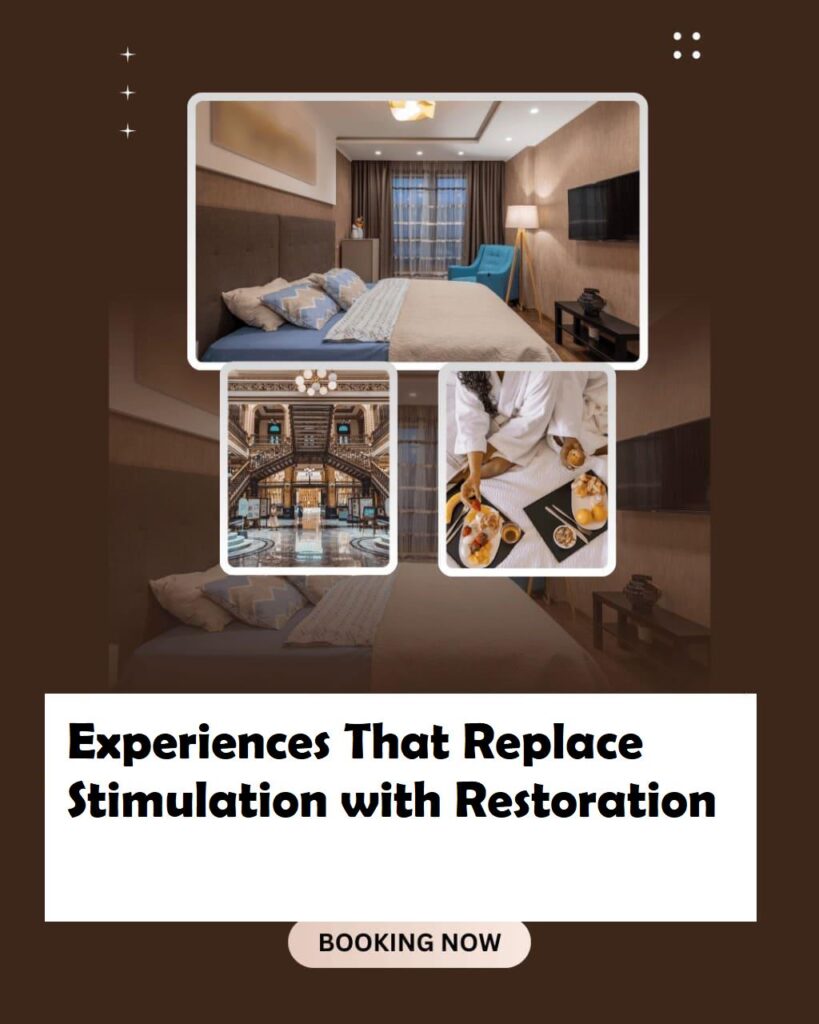
Places Where Silence Is Treated as a Feature
Rather than filling space with background music or visual spectacle, these environments allow quiet to take the lead. Rooms are acoustically softened, public spaces encourage hushed movement, and natural sounds—wind through trees, distant water, early morning birds—become the primary soundtrack. The absence of noise feels deliberate, almost ceremonial. Over time, guests notice their thoughts slowing, conversations becoming more thoughtful, and rest arriving without effort. Silence here is not emptiness; it is a form of care.
Environments Designed Around the Body’s Natural Rhythm
These experiences align daily life with circadian intelligence rather than external schedules. Lighting shifts gradually with the day, meals are offered in generous windows rather than fixed hours, and activities follow energy rather than obligation. Guests wake without alarms, eat when hunger appears, and sleep deeply without stimulation before bed. The result is a subtle but powerful restoration—one that feels less like a retreat and more like a return to how the body prefers to live.
Architecture That Calms Before It Impresses
Instead of dramatic statements, these spaces prioritize proportion, material honesty, and visual rest. Natural textures replace glossy finishes, muted palettes replace contrast-heavy design, and layouts favor flow over drama. The architecture never demands attention; it quietly supports it. Guests often report a sense of ease they cannot immediately explain—a feeling of being held by the space rather than observed by it.
Experiences Built Around Gentle Engagement
Restoration does not mean inactivity. These stays offer engagement without pressure: slow walks rather than fitness challenges, guided breathing rather than performance-based wellness, and creative practices that emphasize process over outcome. Everything is optional, nothing is rushed. The guest remains in control of their energy, choosing participation based on curiosity rather than expectation. This gentle engagement allows restoration to happen without resistance.
Hospitality That Reduces Decision Fatigue
One of the most draining aspects of modern life is constant choice. These experiences quietly remove that burden. From simplified menus to intuitive service flows, guests are guided without being managed. Staff anticipate needs without interruption, and systems are designed to feel obvious rather than impressive. The mind relaxes when it no longer needs to decide every next step.
Q&A: Additional Restorative Hotel Experiences to Consider
Q: Are there coastal experiences aligned with restoration rather than activity?
A: Yes—look for coastal properties that emphasize long stays, minimal programming, and uninterrupted sea views, allowing the ocean’s rhythm to replace structured entertainment.
Q: Do mountain-based retreats support this restorative approach?
A: Absolutely. Mountain environments that limit digital access and focus on slow movement, warm interiors, and seasonal cuisine often provide profound mental recovery.
Q: Can urban hotels offer restoration as well?
A: Select urban retreats do, especially those designed as inward-facing sanctuaries with strong soundproofing, private wellness spaces, and reduced visual noise.
Q: Is this style suitable for high-performing professionals?
A: In many cases, especially so. These experiences are often favored by individuals seeking sustained clarity rather than short-term escape.
Conclusion: When Luxury Becomes Recovery
Experiences That Replace Stimulation with Restoration represent a refined evolution of luxury hospitality. They are not about escape, but about repair. Not about distraction, but about recalibration. Guests leave not with a collection of highlights, but with a quieter mind, a rested body, and a renewed sense of internal balance.
In choosing restoration over stimulation, these experiences offer something increasingly rare: the feeling of being genuinely well again—without needing to explain why.