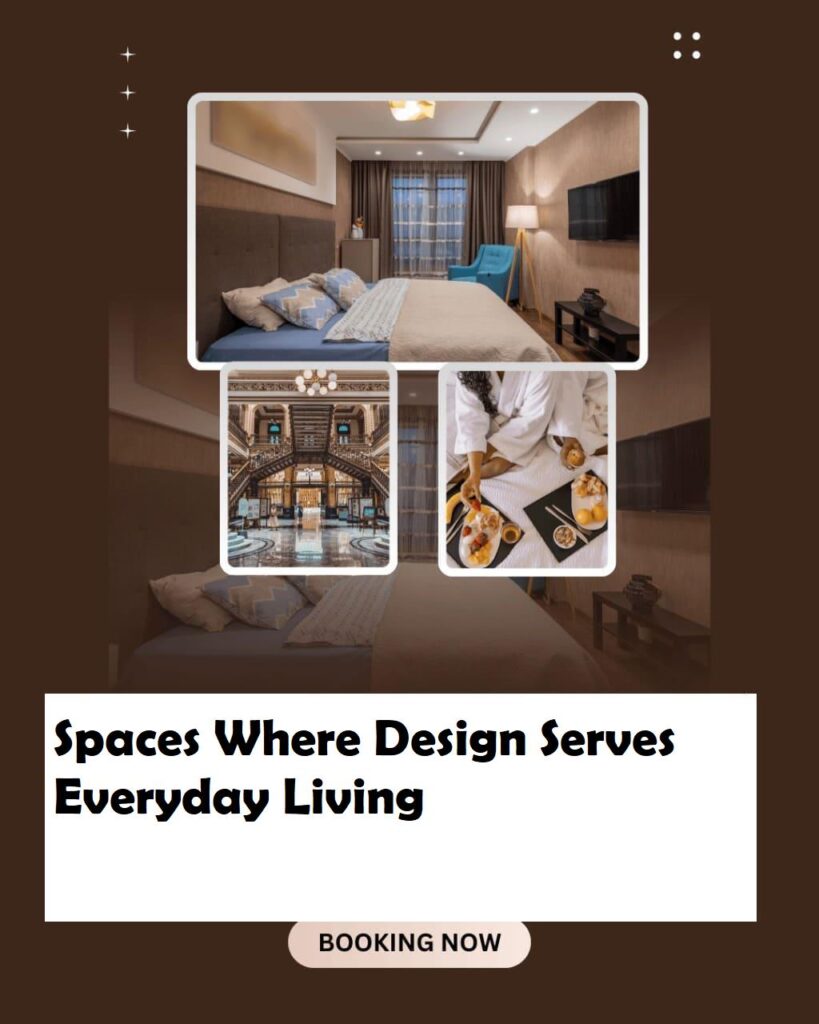
In a world where visual excess often dominates hospitality, there is growing appreciation for places that quietly improve daily living rather than compete for attention. Spaces Where Design Serves Everyday Living explores hotels and resorts created with intention—where layout, materials, light, and flow are shaped to support comfort, clarity, and ease. These are not destinations that rely on spectacle; instead, they offer environments that feel instinctively right, allowing guests to move, rest, and exist without friction. The appeal lies in how naturally these spaces integrate into a guest’s rhythm, making luxury feel lived-in rather than performed.
Design That Prioritizes Movement and Flow
The first theme centers on spaces where design guides movement effortlessly. Corridors feel open instead of confined, rooms unfold logically, and communal areas invite use without demanding attention. Furniture placement supports conversation and rest, while pathways encourage slow transitions rather than abrupt stops. In these environments, guests rarely think about where to sit, walk, or pause—it simply feels intuitive. This type of design is especially valuable for longer stays, where comfort is measured not by novelty, but by how naturally the space adapts to daily routines.
Materials Chosen for Touch and Longevity
Another defining theme is the use of materials selected not only for appearance, but for how they age and feel over time. Natural stone that stays cool underfoot, wood surfaces that soften with use, and fabrics that invite touch rather than caution all contribute to a sense of ease. These hotels avoid fragile finishes or overly precious décor. Instead, they favor textures that feel durable and forgiving, encouraging guests to relax fully without fear of disturbing the environment around them.
Light as a Functional Design Element
In these spaces, light is treated as a core design tool rather than an afterthought. Large windows, filtered daylight, and adjustable ambient lighting allow rooms to shift seamlessly from morning clarity to evening calm. Artificial lighting is layered carefully, avoiding harsh contrasts or unnecessary brightness. The result is an atmosphere that supports focus during the day and rest at night, aligning the interior environment with the body’s natural rhythms.
Spaces That Support Quiet Rituals
Many of these hotels are designed around everyday rituals—morning coffee, reading, working briefly, or simply pausing. Seating areas are positioned to catch soft light, balconies feel like extensions of the interior, and bathrooms function as personal retreats rather than purely utilitarian spaces. These thoughtful details elevate ordinary moments, transforming routine activities into grounding experiences that anchor the day.
Hospitality That Feels Unforced
Service in these environments mirrors the design philosophy: present, precise, and unobtrusive. Staff interactions are well-timed and efficient, allowing guests to maintain privacy while still feeling supported. Technology is integrated subtly, enhancing convenience without dominating the experience. Everything works smoothly in the background, reinforcing the sense that the space exists to serve the guest’s daily needs—not to impress them.
Q&A: Additional Hotels Where Design Supports Everyday Living
Q: Are there urban hotels that embody this philosophy?
Yes. Many contemporary city hotels now prioritize calm layouts, sound-insulated rooms, and multifunctional spaces that balance work and rest—ideal for travelers who value continuity over spectacle.
Q: What about resorts designed for longer stays?
Extended-stay luxury resorts increasingly focus on residential-style layouts, kitchens or kitchenettes, and outdoor areas that feel usable rather than decorative, supporting guests who settle into a slower pace.
Q: Are there boutique hotels that excel in this approach?
Absolutely. Boutique properties often lead in thoughtful design, creating intimate spaces where every element—from lighting to furniture scale—is tailored to daily comfort rather than brand theatrics.
Q: Is this style suitable for family travelers?
Yes. Spaces designed for everyday living tend to be more flexible and forgiving, making them well-suited for families who appreciate durability, space, and intuitive layouts.
Conclusion: Luxury That Lives With You
Spaces Where Design Serves Everyday Living highlights a refined approach to hospitality—one that values usability, comfort, and emotional ease over visual assertion. These hotels and resorts offer an exclusive experience not through excess, but through thoughtful restraint. Guests leave not with sensory overload, but with a lasting sense of balance and restoration. In these spaces, luxury becomes something quietly supportive, enhancing daily life rather than interrupting it—an experience that lingers long after the stay ends.