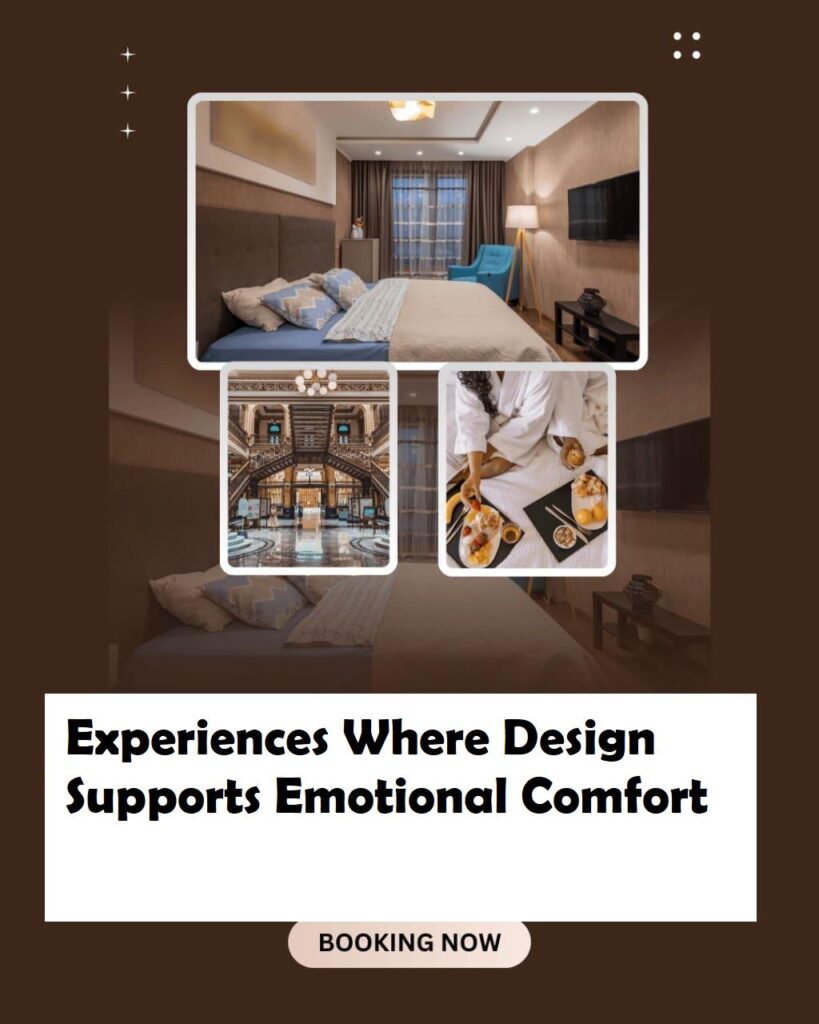
In today’s most considered hospitality environments, luxury is no longer defined by ornamentation alone. Instead, it is measured by how a space makes guests feel from the moment they arrive. Experiences Where Design Supports Emotional Comfort explores destinations where architecture, interiors, and spatial flow are intentionally shaped to ease the mind, steady the senses, and create a subtle sense of emotional security. These are places where design quietly works in the background—never demanding attention, yet constantly improving the guest’s state of being.
Architecture That Calms Before It Impresses
The most emotionally supportive hotels begin their work before a guest even checks in. Exterior architecture often favors balance and proportion over drama, using natural materials, softened edges, and human-scale layouts. Rather than overwhelming arrivals with grandeur, these properties guide guests gently inward. Courtyards, shaded pathways, and transitional spaces help visitors decompress, signaling that time moves differently here. The result is an immediate psychological shift—from urgency to ease.
Interiors Designed for Emotional Balance
Inside, design becomes deeply personal. Color palettes lean toward muted earth tones, soft neutrals, and gentle contrasts that soothe rather than stimulate. Furniture is arranged to encourage relaxation without isolation, allowing guests to feel both private and connected. Textures—linen, wood, stone, and wool—add warmth and familiarity, grounding the space emotionally. Lighting is layered and adaptive, following the rhythm of the day to support circadian comfort rather than disrupt it.
Spatial Flow That Respects the Guest’s Mood
Emotional comfort often comes from freedom of movement. Hotels designed with this philosophy avoid rigid layouts and instead offer intuitive navigation. Guests instinctively know where to go, whether seeking solitude or social energy. Lounges transition naturally into quiet corners, while public areas never intrude on personal zones. This fluidity reduces subconscious stress, allowing guests to follow their mood rather than adapt to the building.
Rooms That Feel Like Personal Sanctuaries
Guest rooms in emotionally intelligent hotels function as private retreats rather than display spaces. Design emphasizes acoustics, tactile comfort, and visual simplicity. Windows frame calming views instead of distractions, while beds are positioned to promote rest and a sense of safety. Storage is discreet, technology unobtrusive, and every detail serves a purpose. The room becomes a place to reset emotionally—whether after a long journey or a demanding day.
Nature as an Emotional Anchor
Connection to nature is a recurring theme in these experiences. Gardens, water features, and open-air terraces are not decorative extras but emotional anchors. Even in urban settings, greenery and natural light are integrated thoughtfully to counterbalance city intensity. This biophilic approach helps regulate stress, encouraging mindfulness without instruction. Guests feel restored simply by being present in the space.
Service That Aligns With the Design
Design-led emotional comfort is reinforced by service that mirrors its subtlety. Staff interactions are intuitive and respectful, offering assistance without intrusion. The environment itself often guides behavior, reducing the need for overt rules or explanations. When architecture and service align, guests experience a rare sense of being understood without having to articulate their needs.
Q&A: Hotels Where Design Enhances Emotional Comfort
Q: Which hotels are known for emotionally supportive design experiences?
A: Several standout properties exemplify this approach, including Aman Tokyo, where minimalist design and expansive space create calm within a dense city, and The Upper House, celebrated for its quiet vertical sanctuary and flowing interiors.
Q: Are there resorts that focus strongly on emotional wellness through design?
A: Yes. COMO Shambhala Estate integrates nature, architecture, and wellness into a deeply restorative experience, while Six Senses Vana uses thoughtful spatial design to support reflection and emotional reset.
Q: Can emotionally supportive design be found in urban luxury hotels?
A: Absolutely. Properties like The Silo Hotel transform industrial architecture into emotionally resonant spaces, and Edition Miami Beach balances energy and serenity through carefully curated interiors and natural elements.
Conclusion: When Design Becomes Emotional Care
Experiences Where Design Supports Emotional Comfort reveal a refined understanding of modern luxury—one that values emotional well-being as much as visual beauty. These hotels and resorts demonstrate that when architecture, interiors, and service are thoughtfully aligned, guests feel calmer, more centered, and genuinely cared for. The exclusivity of these experiences lies not in excess, but in restraint: spaces that listen, adapt, and quietly support the emotional journey of every guest who enters.