In a world where travel often mirrors the pace of everyday life, there is growing appeal in places that quietly resist urgency. Hotels Built to Feel Calm by Default speaks to a new hospitality philosophy—one where stillness is not staged, but embedded into the structure, rhythm, and intentions of the space itself. These hotels do not rely on dramatic statements or overstimulation. Instead, calm becomes the baseline experience, gently guiding guests toward a slower, more grounded way of being from the moment they arrive.
Rather than demanding attention, these environments invite presence. Architecture, service flow, and spatial planning are orchestrated to reduce friction and soften the senses. From muted palettes and thoughtful acoustics to intuitive layouts that minimize decision-making, every detail contributes to an atmosphere where rest feels natural rather than earned.
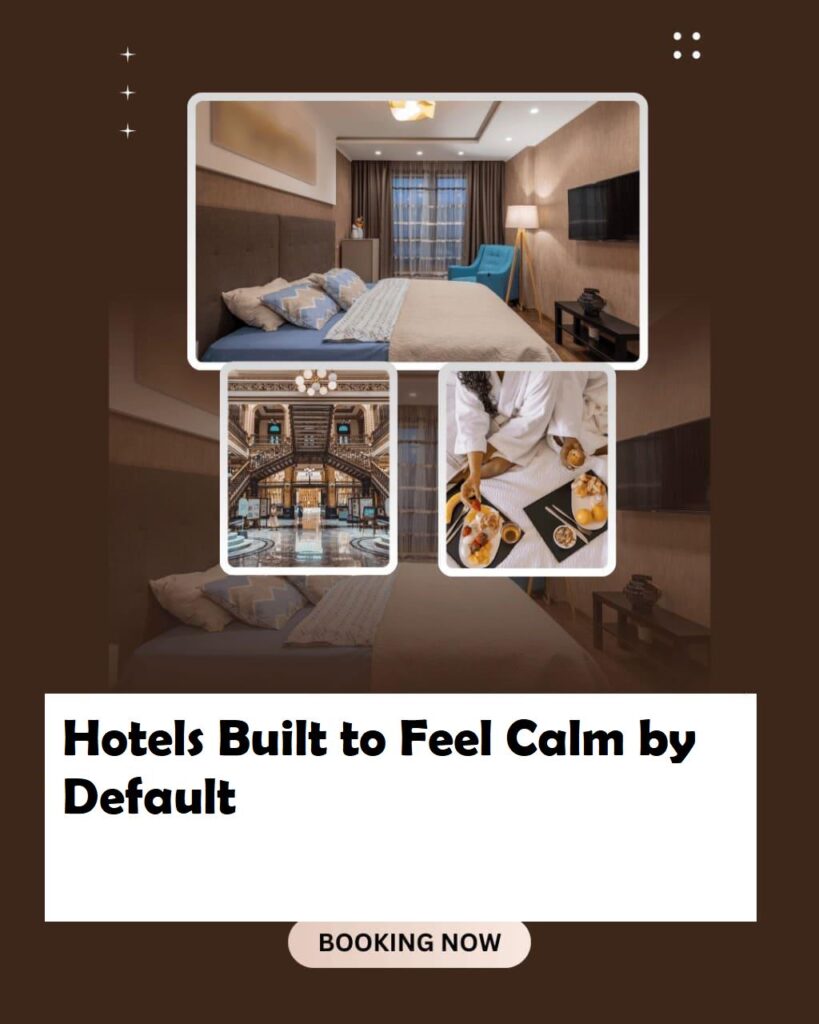
Architecture That Lowers the Volume of Thought
At the heart of calm-by-default hotels is architecture designed to recede, not impress. Lines are clean but warm, spaces are generous without feeling vast, and natural light is used as a primary design element. Windows frame landscapes like living artwork, allowing the outside world to slow the internal pace. Materials such as stone, wood, and linen ground the environment, creating a tactile connection that feels reassuring and human.
Corridors are wide and uncluttered, eliminating the subconscious stress of narrow passageways. Rooms unfold intuitively, with sleeping, bathing, and lounging areas flowing seamlessly. The result is an environment where the mind does not need to stay alert—where calm emerges organically through spatial clarity.
Sound, Silence, and the Luxury of Quiet
True calm is often defined by what is absent. In these hotels, silence is curated with as much care as any visual detail. Soundproofing is discreet yet effective, ensuring that the world outside remains at a respectful distance. Background music, if present at all, is subtle and situational—designed to support mood rather than shape it.
Even social spaces respect this philosophy. Lounges and restaurants are arranged to allow conversation without competition, while private corners offer refuge for those who prefer solitude. Silence here is not emptiness; it is a soft, supportive presence that allows guests to hear themselves think again.
Service Designed to Remove Cognitive Load
Calm-by-default hospitality extends beyond design into the way service is delivered. Staff interactions are unhurried, intuitive, and observant rather than performative. Guests are not overwhelmed with options or schedules; instead, experiences are gently suggested, allowing autonomy without pressure.
Check-in feels more like a transition than a transaction. Daily routines are simplified, with thoughtful defaults that anticipate needs before they are voiced. This approach reduces the constant micro-decisions that often follow travelers, replacing them with a sense of being quietly looked after.
Private Spaces That Encourage Restoration
Guest rooms in these hotels are sanctuaries rather than showcases. Lighting is layered and adjustable, encouraging evenings that wind down naturally. Beds are positioned to emphasize rest, often oriented toward windows or calming focal points. Bathrooms feel spa-like without excess, prioritizing space, water, and warmth over spectacle.
Technology is present but restrained, offering convenience without intrusion. The absence of visual clutter allows personal rituals—reading, reflection, sleep—to take center stage. In these rooms, time seems to expand, and rest becomes the default state.
Shared Areas That Respect Personal Pace
Public spaces in calm-driven hotels are designed with flexibility in mind. Guests can engage or withdraw without explanation. Gardens, terraces, and libraries provide transitional spaces that bridge privacy and connection. These areas encourage lingering rather than consumption, supporting moments of quiet observation or unstructured thought.
Even wellness facilities follow this principle. Spas, pools, and meditation rooms are integrated into the flow of the hotel, accessible without ceremony. Wellness is not an event—it is simply part of the environment.
Q&A: Thoughtful Hotel Recommendations
Q: What types of hotels best embody calm-by-default design?
A: Boutique hotels with a strong architectural identity, minimalist resorts in natural settings, and properties that prioritize space and silence over scale tend to excel in this approach.
Q: Are these hotels suitable for longer stays?
A: Yes. Their emphasis on routine-friendly layouts, gentle service, and mental ease makes them particularly well-suited for extended stays focused on rest or creative work.
Q: Where can travelers find similar experiences globally?
A: Look for secluded coastal retreats, countryside lodges with modern design, alpine hotels focused on wellness, and urban sanctuaries that use inward-facing layouts to shield guests from city intensity.
Conclusion: Where Calm Is the Starting Point
Hotels Built to Feel Calm by Default redefine luxury as an emotional experience rather than a visual one. By embedding ease into architecture, service, and atmosphere, these hotels offer something increasingly rare: environments where the nervous system can finally stand down. Guests leave not just rested, but recalibrated—carrying with them the quiet confidence that comes from time spent in spaces designed to honor stillness.