In a world where travel often feels oversized—defined by towering lobbies, endless corridors, and overwhelming itineraries—there is a growing appreciation for destinations that return hospitality to a human scale. These are places designed not to impress through magnitude, but to comfort through proportion. Here, architecture, service, and atmosphere align with how people naturally move, pause, and connect. Destinations designed around human scale and ease offer an experience where luxury is measured in effortlessness, not excess, and where guests feel intuitively at home from the moment they arrive.
Spaces That Feel Instinctively Navigable
The first hallmark of human-scaled destinations is clarity of movement. Pathways are intuitive, transitions are gentle, and guests never feel lost or rushed. Rather than vast, echoing spaces, these environments rely on thoughtful layouts—rooms positioned within easy reach of communal areas, gardens that unfold gradually, and interiors that guide rather than overwhelm. The result is a stay where physical ease translates into mental calm, allowing guests to settle quickly and remain present throughout their experience.
Architecture That Honors the Individual
Human-scale design prioritizes proportion over grandeur. Ceiling heights feel welcoming rather than imposing, furnishings invite use rather than admiration, and materials offer warmth through texture. These destinations often employ natural stone, soft woods, and muted palettes to reinforce a sense of grounding. The architecture respects the human body—how we sit, walk, rest, and observe—creating spaces that feel responsive rather than performative. Luxury here is quiet, expressed through balance and restraint.
Service Designed to Flow, Not Interrupt
Ease is not only spatial but experiential. Service at these destinations operates with a subtle rhythm, anticipating needs without demanding attention. Staff interactions feel personal rather than procedural, and assistance arrives seamlessly, often before it is requested. There is no pressure to conform to rigid schedules; instead, the guest experience adapts naturally to individual pace. This style of hospitality fosters trust and comfort, reinforcing the sense that the environment is designed around people, not systems.
Social Spaces That Encourage Gentle Connection
Communal areas in human-scaled destinations are intentionally modest and inviting. Lounges feel like extensions of living rooms, dining spaces encourage conversation without noise intrusion, and outdoor terraces invite lingering rather than spectacle. These environments support organic interaction—guests may engage when they wish or retreat into privacy without effort. The design encourages choice, allowing social energy to ebb and flow naturally.
Private Spaces That Restore Effortlessly
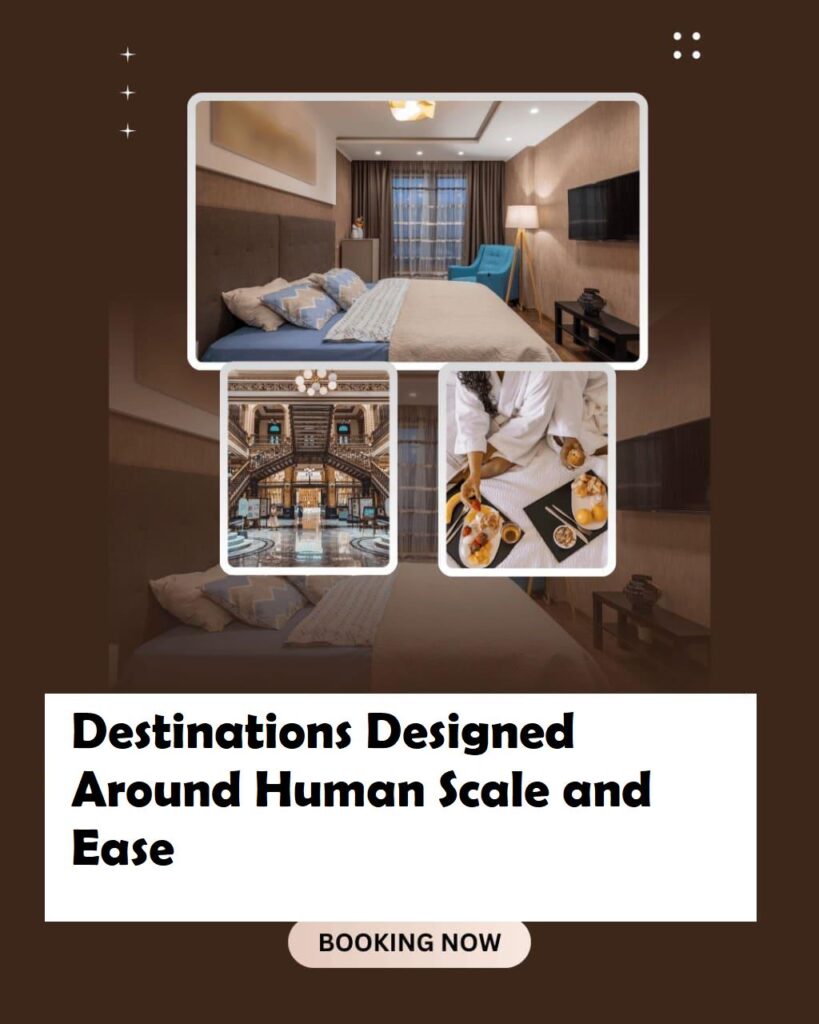
Guest rooms and suites reflect the same philosophy of ease. Rather than excessive technology or dramatic décor, they focus on comfort, light, and quiet. Windows frame calming views, seating is positioned for genuine relaxation, and layouts support simple routines. Everything is placed where intuition expects it to be, reducing friction and enhancing rest. These rooms become personal sanctuaries, offering restoration without instruction.
Destinations That Integrate Seamlessly with Place
Human-scale hospitality often extends beyond the property itself. These destinations integrate gently with their surroundings, respecting local rhythms and landscapes. Whether situated in urban neighborhoods or natural settings, they feel like a continuation of their environment rather than an imposition upon it. Guests experience a sense of belonging, as if the destination exists in harmony with both people and place.
Q&A: Additional Hotels Embracing Human Scale and Ease
Q: Are there luxury hotels that focus on human-scale design in urban environments?
Yes. Many boutique urban hotels prioritize walkability, intimate public spaces, and neighborhood integration, offering a calm counterbalance to city intensity.
Q: Which destinations are ideal for travelers seeking sensory calm?
Hotels emphasizing natural materials, controlled acoustics, and soft lighting are particularly suited for guests seeking mental and physical ease.
Q: Can large resorts also offer human-scale experiences?
Absolutely. Some larger properties divide their spaces into smaller, village-like zones, preserving intimacy while offering expansive amenities.
Q: Are these destinations suitable for long stays?
They are especially well-suited for extended visits, as their ease-driven design reduces fatigue and supports sustainable comfort over time.
Conclusion
Destinations designed around human scale and ease redefine luxury as a feeling rather than a statement. They remove friction from travel, replacing complexity with clarity and excess with intention. In these spaces, guests are not impressed into silence but welcomed into comfort. Every detail—from architecture to service—supports a natural rhythm of living, resting, and connecting. The exclusivity of these destinations lies not in restriction, but in their rare ability to make comfort feel instinctive, personal, and enduring.