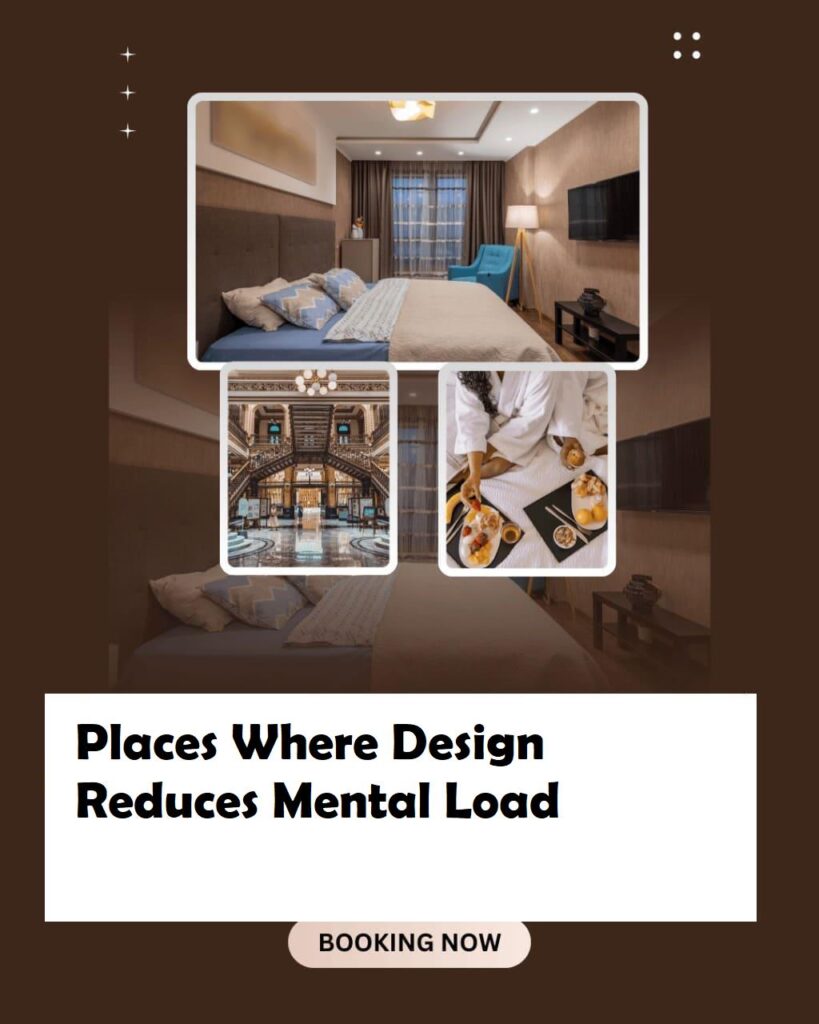
In an era defined by constant notifications, crowded itineraries, and visual noise, a new form of hospitality is quietly redefining luxury. Places Where Design Reduces Mental Load are not about dramatic statements or opulent excess. Instead, they are environments carefully shaped to ease cognitive effort, allowing guests to think less, feel more, and truly arrive. These destinations use architecture, materials, layout, and rhythm to remove friction from daily life, offering a rare sense of clarity and calm through design itself.
Design That Clears the Mind
At the heart of these places is a philosophy of intentional simplicity. Spaces are planned so that movement feels intuitive—corridors lead naturally, rooms unfold logically, and nothing competes for attention. Visual clutter is replaced with restrained palettes, soft textures, and balanced proportions. Guests often describe an immediate sense of relief, as if their minds no longer need to work to understand their surroundings. The environment quietly supports them, rather than asking for engagement.
Architecture That Guides Without Demanding
These destinations excel at subtle guidance. Lighting transitions gently from public to private spaces, signaling shifts in energy without signage or instruction. Ceiling heights adjust to influence mood—open and airy where social connection is encouraged, lower and cocooning where rest is the priority. This architectural intelligence removes the mental effort of decision-making, allowing guests to move through their stay with ease and confidence.
Interiors Designed for Emotional Rest
Furniture, materials, and finishes are chosen not just for beauty, but for how they make the body and mind feel. Upholstery invites lingering, surfaces feel warm to the touch, and color choices are grounded in nature. There is a deliberate avoidance of harsh contrasts or overly stimulating patterns. Instead, repetition and rhythm create familiarity, helping guests settle quickly. Emotional rest becomes as important as physical comfort.
Spaces That Minimize Choice Fatigue
From curated dining menus to streamlined room controls, these places understand the weight of too many options. Choices are thoughtfully edited so guests feel guided rather than restricted. Technology is present, but discreet—lighting, temperature, and privacy controls are simplified to reduce cognitive load. By removing unnecessary decisions, these destinations give guests something invaluable: mental space.
Landscapes That Complete the Experience
Outdoor environments play an equally important role. Gardens, courtyards, and terraces are designed as extensions of the interior calm. Pathways curve gently, views are framed intentionally, and natural sounds are allowed to dominate. Whether overlooking water, forest, or open sky, the landscape reinforces the feeling that nothing is urgent. Time seems to slow, and presence becomes effortless.
Hospitality That Anticipates Needs
Service in these places mirrors the design philosophy. Staff interactions are unobtrusive yet precise, anticipating needs before they are verbalized. Check-in feels seamless, routines are predictable without being rigid, and privacy is respected at every stage. Guests are never overwhelmed with information or attention. Instead, hospitality operates quietly in the background, supporting rather than interrupting the experience.
Q&A: Additional Destinations Known for Low-Stimulation Design
Q: Are there hotels that focus specifically on mental clarity through design?
Yes, several boutique and high-end hotels around the world are intentionally designed to reduce sensory overload. These properties prioritize spatial clarity, natural materials, and calm visual language over spectacle.
Q: Do wellness-focused resorts follow this approach?
Many modern wellness resorts integrate this philosophy deeply into their design. Beyond spas and treatments, the architecture itself supports mental balance through silence, flow, and intentional restraint.
Q: Can urban hotels also reduce mental load?
Absolutely. Some city-based hotels act as sanctuaries within busy environments, using layered insulation, inward-facing layouts, and minimalist interiors to shield guests from external chaos.
Q: Are these experiences suitable for long stays?
Yes. In fact, many guests find these environments ideal for extended stays, remote work, or reflective travel, as the design supports sustained mental ease rather than short-term indulgence.
Conclusion: Luxury Defined by Mental Ease
Places Where Design Reduces Mental Load represent a refined evolution of luxury—one that values clarity over complexity and calm over spectacle. These destinations offer more than beautiful spaces; they provide a mental reset, allowing guests to step away from constant stimulation and return to a more centered state of being. In these environments, design becomes a quiet ally, delivering an exclusive experience where comfort, clarity, and emotional ease are not added features, but the very foundation of the stay.