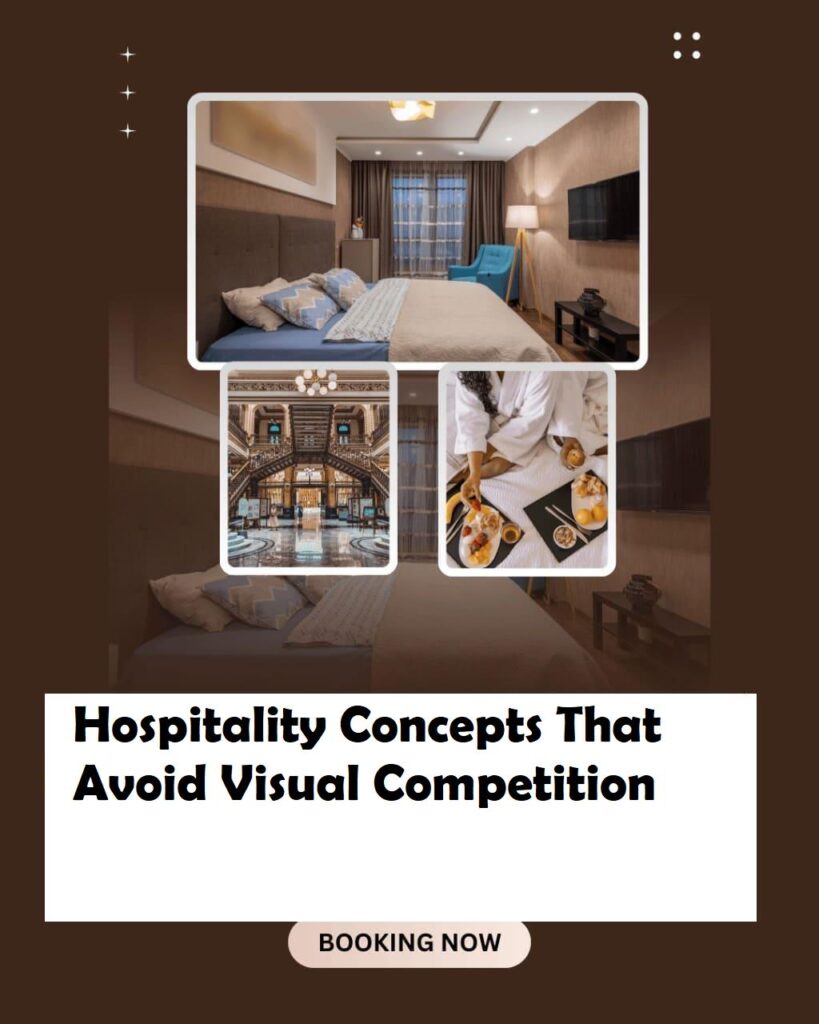
In an era when many hotels compete for attention through bold colors, dramatic lighting, and statement architecture, a quieter philosophy has begun to stand out. Hospitality Concepts That Avoid Visual Competition explores destinations designed to feel calm rather than commanding—places where no single element fights for dominance, and where the guest’s experience is allowed to unfold naturally. These environments do not demand to be photographed or admired instantly. Instead, they reward time, presence, and sensitivity. Luxury here is not loud; it is composed, balanced, and deliberately restrained.
Design That Steps Back, Not Forward
At the core of this concept is design that knows when to recede. Spaces are arranged so that architecture, furniture, textures, and light coexist without rivalry. Neutral palettes, soft transitions between materials, and carefully proportioned rooms ensure that nothing overwhelms the senses. The result is an atmosphere where guests feel oriented rather than stimulated—able to settle in without needing to visually process their surroundings.
Material Harmony Over Statement Pieces
Rather than relying on iconic objects or dramatic décor, these hotels focus on material consistency. Wood, stone, linen, and natural metals are chosen for how they age and how they interact with light throughout the day. No single surface competes for attention; instead, everything contributes to a unified tone. Guests often notice that spaces feel “right” without being able to pinpoint why—an intentional outcome of avoiding visual competition.
Lighting as a Quiet Guide
Lighting in these environments is subtle and purposeful. It guides movement and mood rather than announcing itself. Indirect illumination, warm temperature choices, and natural daylight integration create a sense of continuity from morning to night. There are no harsh contrasts or theatrical effects—just a steady visual rhythm that supports rest, conversation, and reflection.
Architecture That Frames, Not Performs
The architectural approach favors framing experiences instead of showcasing form. Windows highlight landscapes without exaggeration. Corridors move gently, avoiding dramatic reveals. Public areas feel intuitively navigable, reducing cognitive load. Guests are not asked to admire the building; they are invited to inhabit it. This restraint fosters comfort and trust, particularly for travelers seeking mental clarity.
Furniture Designed for Presence
Furniture selection reinforces this philosophy. Pieces are chosen for proportion, tactility, and comfort rather than novelty. Seating encourages stillness, reading, or conversation without visually dominating the room. Even in shared spaces, the arrangement minimizes visual interruption, allowing guests to feel private without isolation.
A Calm Social Environment
When visual competition is removed, social interaction changes. Guests speak more softly, linger longer, and move with less urgency. The environment subtly signals that there is no need to perform or impress. This creates a rare form of luxury: emotional ease. Travelers often report feeling unusually relaxed without knowing exactly why—a testament to design that supports behavior rather than spectacle.
Q&A: Thoughtfully Restrained Hotel Recommendations
Q: Are there hotels known for this visually restrained approach?
A: Yes. Several contemporary luxury properties around the world intentionally minimize visual dominance, focusing instead on balance, natural materials, and spatial calm. These hotels often emphasize wellness, long stays, and repeat visitation rather than short-term impact.
Q: Is this style suitable for luxury travelers?
A: Absolutely. In fact, many high-end travelers now associate true luxury with environments that respect attention and mental space. Visual restraint signals confidence—it suggests that the experience does not need exaggeration to be valuable.
Q: Does avoiding visual competition mean the design feels boring?
A: Not at all. These spaces are often deeply engaging over time. Subtle shifts in texture, light, and proportion reveal themselves gradually, making the stay feel layered rather than immediately consumed.
Q: What types of travelers benefit most from this concept?
A: Guests seeking restoration, focus, and emotional clarity—such as creatives, executives, and slow-travel enthusiasts—tend to value these environments most. The design supports reflection without isolation.
Conclusion: Luxury Without Visual Noise
Hospitality Concepts That Avoid Visual Competition highlights a refined direction in modern travel—one where luxury is measured not by how much attention a space demands, but by how effortlessly it supports the guest. These hotels offer an exclusive experience precisely because they do not compete for admiration. Instead, they create room for stillness, thought, and genuine comfort. In a world saturated with visual stimulus, such restraint is not just rare—it is quietly extraordinary.