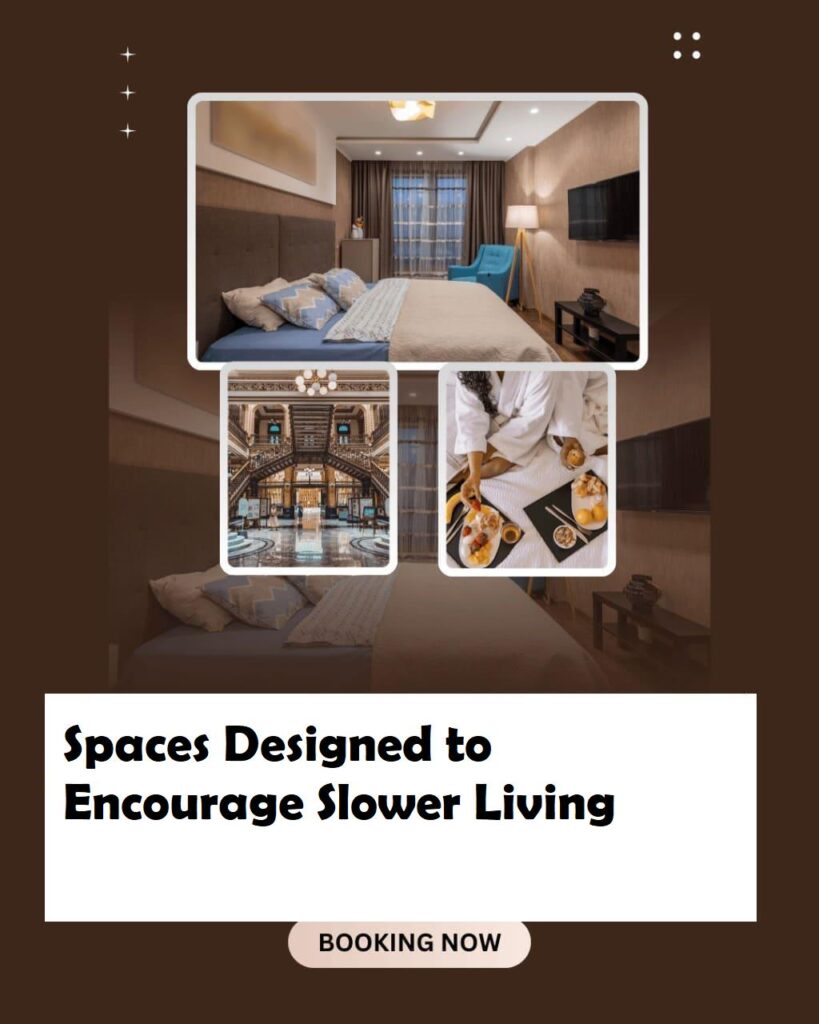
In a world shaped by constant notifications, tight schedules, and perpetual motion, the idea of slowing down has become a luxury in itself. Spaces Designed to Encourage Slower Living explores destinations that intentionally soften the pace of travel—places where architecture, atmosphere, and service gently guide guests away from urgency and toward presence. These environments are not defined by excess activity or spectacle, but by thoughtful restraint. Every detail is calibrated to invite guests to breathe deeper, move with intention, and rediscover the pleasure of unhurried time.
Design That Respects Stillness
The foundation of slower living begins with spatial design. Hotels that embrace this philosophy avoid visual overload and instead favor balanced proportions, muted palettes, and natural materials. Stone, wood, linen, and soft light replace glossy surfaces and dramatic contrasts. Corridors feel wider, rooms feel calmer, and common areas feel more like private sanctuaries than social hubs. The result is an environment that quietly encourages guests to linger rather than rush.
Landscapes That Set the Rhythm
Slower living is often reinforced by a strong connection to the surrounding landscape. Properties nestled among mountains, coastlines, forests, or open countryside use nature not as a backdrop, but as an active participant in the guest experience. Views are framed deliberately. Outdoor spaces are designed for pause—terraces, shaded walkways, and reflective gardens invite stillness. Here, the passing of daylight becomes the primary schedule, gently replacing clocks and alarms.
Hospitality Without Interruption
Service in these spaces is intentionally unobtrusive. Staff anticipate needs without creating constant interaction, allowing guests to remain immersed in their own rhythm. Check-ins feel seamless, meals are unhurried, and housekeeping respects privacy over frequency. Luxury is expressed not through constant attention, but through the freedom to be left alone when desired. This balance creates a rare sense of autonomy—an essential element of true rest.
Rituals Over Itineraries
Rather than packed activity schedules, slower-living destinations emphasize simple, repeatable rituals. Morning tea on a private terrace, a late breakfast enjoyed without time limits, or an afternoon walk followed by quiet reflection. Wellness offerings tend to focus on gentle restoration—yoga, meditation, thermal bathing, or nature-based therapies—designed to support long-term balance rather than short-term stimulation. Guests are invited to listen to their own needs instead of following a predefined agenda.
Rooms Designed for Unhurried Time
Guest rooms play a critical role in shaping the pace of a stay. In hotels designed for slower living, rooms feel less like temporary accommodations and more like personal retreats. Seating is comfortable and purposeful, lighting is adjustable and warm, and layouts encourage movement at an easy pace. Technology is present but discreet, allowing guests to disconnect without discomfort. The room becomes a place where doing nothing feels intentional rather than idle.
Q&A: Recommended Hotels That Embody Slower Living
Q: Which hotels are known for encouraging a slower pace through design and atmosphere?
A: Several standout properties are widely admired for this approach, including Aman Kyoto, where forest immersion and minimalist architecture create deep calm, and Fogo Island Inn, which blends stark natural beauty with contemplative interiors.
Q: Are there European destinations aligned with slower living?
A: Yes. Hotel Castello di Reschio offers a secluded estate experience focused on rhythm and restoration, while The Lodge at Ballyfin emphasizes privacy, space, and timeless elegance in a serene countryside setting.
Q: What about wellness-focused retreats?
A: Properties like Como Shambhala Estate are designed entirely around holistic well-being, combining nature, architecture, and personalized wellness journeys to support sustained calm rather than quick escapes.
Conclusion: Luxury Measured in Time
Spaces Designed to Encourage Slower Living redefine luxury as the freedom to exist without urgency. These destinations do not demand attention—they offer relief from it. Through intentional design, respectful service, and environments shaped by nature and balance, guests are given something increasingly rare: time that feels truly their own. In choosing spaces like these, travelers gain more than comfort or beauty—they gain the opportunity to reconnect with themselves at a gentler, more meaningful pace.